📊 Editorial Consensus89%
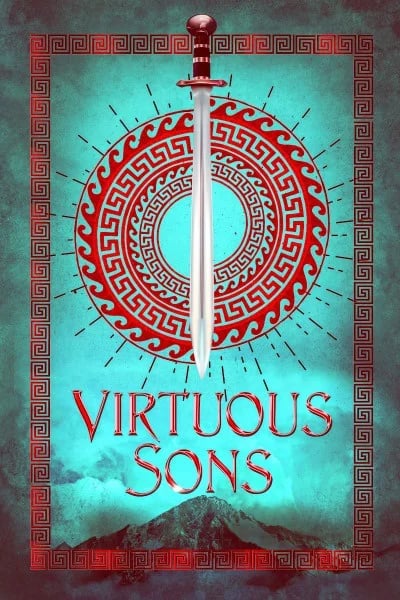
Virtuous Sons: A Greco Roman Xianxia
by Ya Boy
● OngoingRoyalroad
#Progression#War and Military#Wuxia#Comedy#Multiple Lead Characters#Adventure
Archivist Notes
In the twilight of the eighth Olympic Century, the Mediterranean basks in a decadent peace, yet beneath this golden veneer lies a brutal truth, that the climb to the peak of Olympus Mons is a mad, ruinous endeavor that separates men from beasts. This is the world of Virtuous Sons, a groundbreaking hybrid epic where the high-concept worldbuilding of classic Greek philosophy and Roman military discipline merges seamlessly with the progression systems of traditional xianxia. Cultivation here is not merely about gathering spiritual qi, but the active refinement of the tripartite soul through the pursuit of performative virtue. In the city-state of Alikos, the arrogant and brilliant Lio Aetos, first son of the Tyrant Damon Aetos, lives a life of unchallenged privilege within the Rosy Dawn Cult, yet he paces his golden cage with an insatiable hunger for true freedom.
The catalyst for his destiny arrives in the form of Solus, a tattered Roman slave forced to fight for the amusement of Greek aristocrats. Solus is no ordinary bonded man, as he is the adopted son of a Roman general and a former legate who witnessed the salt and ash of Rome's fall to the monstrous, lightning-wielding cultivators of Carthage. Bound by iron shackles that suppress his vital pneuma, Solus still possesses a defiant, unyielding presence that captures Lio's attention. When their eyes meet, a silent recognition sparks between them, two scions of rival civilizations, both suffocating under the heavy threads of fate. Their initial violent clash in a starlit pool ignites a legendary partnership, triggering a mutual awakening of Lio's Sophic potential and Solus' dormant Roman gravitas, setting them on a ruinous path to challenge the very heavens.
Unlike the solitary path of the Greek sophists who use high-concept rhetoric to manipulate natural laws, the Roman style of cultivation is forged in the mud of the legion camps, relying on rhythmic cadence and the shared weight of command. By unlocking Solus' chains, Lio does not just free a slave, he unleashes a military commander whose very soul operates on the principles of collective discipline. Together, they represent a volatile fusion of cultures that threatens to overturn the delicate geopolitical balance of the Mediterranean. As they steal a sacred ship and flee toward the holy sanctuary of Olympia, they carry with them the seeds of a new era, pursued by furious relatives, rival cults, and the watchful eyes of the Fates themselves.
I may be a slave. But you aren’t any more free.
Virtuous Sons: A Greco Roman Xianxia
Story Chronicles
NODE 01The Spark in the Starlit Pool
PankrationRoman PatriotCultivation Bottleneck
Archivist Insights
The decadent peace of the Rosy Dawn Cult is shattered during a dazzling symposia when Lio's incompetent cousin, Heron, attempts to face-slap a quiet slave for the entertainment of the young aristocrats. To the shock of the assembled initiates, the tattered slave ducks beneath Heron's elite techniques and chokes him into submission with his own manacles, prompting Lio to step in and suppress the outrage of his peers. Recognizing that this slave is no common citizen but a highly trained warrior, Lio confronts him later in the starlit courtyard of the estate, where the slave is audacious enough to dip his bare feet into the sacred filial pools while tuning a crude lyre. Their ensuing conversation reveals the slave's name is Solus, a proud patrician from the salted ruin of Rome, which immediately sparks a brutal, joyous pankration wrestling match in the tattered waters of the pool. As they trade bone-shattering blows, Lio realizes that Solus possesses an unyielding, formless quality that completely disdains the hierarchy of the Greek cults. The physical exertion of their secret combat forces Lio's stubborn pneuma to circulate with renewed vigor, while Solus manages to weather the young lord's enhanced strength despite his iron shackles suppressing his vital breath. This secret bond deepens over the following days as Lio forces Solus to help him clean the defiled pools, ignoring his father's disapproval and the mounting jealousy of his cousins. Lio begins to drag Solus into his daily routines, using the Roman's rigid military discipline to help his youngest cousin, Myron, break through a stubborn cultivating bottleneck. This unorthodox partnership culminates in a tense confrontation in the gymnasium, where Lio uses his superior pankration forms to utterly humiliate a rival duelist who attempted to use a live blade against him, proving to the watching slaves and initiates that the young heir is a force of nature. Yet, as the upcoming initiation rites loom, the silent understanding between the master of Alikos and the slave of Rome promises a storm that will soon level the mountain.
◆ Conclusion
The meeting of Greek talent and Roman discipline initiates a paradigm shift that challenges the rigid social hierarchy of the Rosy Dawn Cult.
NODE 02The Initiation and the Sun God's Corpse
Sun God MysteryAscendant TrialsTyrant Presence
Archivist Insights
As the annual initiation rites of the Rosy Dawn begin, Lio executes an outrageous plan by kidnapping Solus from his quarters, throwing a leather sack over his head, and sponsoring him as an initiate despite his slave status. The new blood is dragged down the mountain to the salty shores of the Ionian Sea, where they are forced to drink the potent, mind-altering kykeon wine before greeting the rising sun as their pneuma is ignited. Returning to the mountain, the cult is locked in a riotous, bloody melee of ascendant trials, where Heron attempts to reclaim his lost standing by attacking the slave, only for Lio to intervene and break his nose in a brutal display of martial superiority. Lio uses this victory to teach Solus the true meaning of the Aristois class, demonstrating that his supremacy is not a matter of birth but of performative excellence. The rites reach a terrifying climax at dawn when a literal meteor falls from heaven, obliterating the central pavilion and punching a yawning chasm deep into the mountain. Lio and Solus descend into the dark, bypassing the theatrical staging of the other initiates to reach the deepest, most hallowed cavern of the cult. There, they behold the ultimate mystery of the Rosy Dawn, which is the massive, bisected corpse of a fallen sun god, its face an eerie, featureless flat surface, holding a rising sun within its palm. Under the dominant gaze of the Tyrant Damon Aetos, the sun rises within the cavern, leaving Solus shell-shocked and Lio more determined than ever to break free from the invisible chains of his father's legacy. This glimpse of divinity alters the trajectory of both young men, sowing the seeds of a rebellion that will soon shatter the peace of Alikos. When they return to the surface, the dynamic between them has changed forever, as Solus openly challenges Lio's freedom, pointing out that despite his high status, the young lord is just as trapped within the hierarchy of Alikos as any slave. This philosophical spark ignites a quiet fire in Lio's chest, prompting him to look past the borders of his home toward the wider, untamed world.
◆ Conclusion
Beholding the fallen god's corpse exposes the artificial nature of their world, driving both protagonists to seek absolute freedom beyond Alikos.
NODE 03The Rebellion and Escape from Alikos
Great EscapePankration IntentRoman Gravitas
Archivist Insights
The tension between Lio and his family reaches a boiling point during the annual Daylight Games in the Scarlet Stadium, where Lio dominates every athletic and martial event with insulting ease, leaving his rivals in despair. In a final, desperate act of defiance before the games, Lio demands that Solus shave his face with a ritual knife, presenting himself to the furious crowd and his shocked betrothed, Lydia, with a clean face that mocks Greek tradition. After choking out his final rival in the sand, Lio's pneuma erupts, allowing him to break through his year-long bottleneck and ascend to the tenth rank of the Civic Realm. Realizing that the city is nothing but a golden chain, Lio waits for the perfect moment during his cousin Nikolas' wedding feast to shatter Solus' manacles, declaring that his life is now his own. As they attempt to flee, they are confronted in the halls of the estate by Lio's cousins and five elder philosophers, leading to a spectacular, destructive brawl. Lio refuses to draw his stolen blade, instead unleashing his newly manifested Pankration Intent, which materializes as ten glowing arms of pure pneuma that grapple and subdue his family simultaneously. When the elder philosophers attempt to crush him with their superior Sophic pneuma, Solus finally unleashes his dormant Roman virtue, Gravitas, which falls like a suffocating blanket of command that drives the elders to their knees. Solus uses his spear to shatter the eastern wall of the estate, and together, the two young men leap off the cliff into the open air just as the rosy-fingered dawn breaches the horizon. As they plummet toward the Ionian Sea, Lio's pneuma wings unfurl for the first time, cementing his ascension to the Sophic Realm while they leave a ruined legacy and a furious family behind. They steal the sacred ship Eos and set sail across the endless blue, but their brief moment of triumph is cut short when they realize that the entire Mediterranean is a viper's nest of political intrigue, and their flight has marked them as targets for every ambitious force in the region.
◆ Conclusion
By violently severing his ties to the Rosy Dawn, Lio chooses a path of ruinous freedom, forcing Solus to embrace his warrior past.
NODE 04The Shadow Hunt and the Scholar's Grip
Olympia Power VacuumShadow AssassinsSocrates Cave
Archivist Insights
Arriving on the shores of the holy sanctuary of Olympia, Lio and Solus find the city in a state of quiet devastation following the sudden death of the Kyrios of the Raging Heaven Cult. The power vacuum has unleashed the Crows, a faction of masked assassins and kidnappers who are targeting the young Olympic contenders to secure succession for their ambitious elders. Solus accidentally implicates them both during the funeral by using his Sophic sense to tag the hidden Heros in the crowd, drawing the attention of the fierce, scarred Heroine Elissa and the archer Lefteris. When Scythas, a young Hero of the Howling Wind, rushes to save a kidnapped competitor, Solus follows him into the dark alleys and is forced into a brutal, poisoned duel with a lethal Crow assassin. Operating on pure legionnaire instinct, Solus calls out Roman military cadence, using the rhythm to master the paralyzing poison in his veins and smash the assassin through a stone wall with his Gravitas. This display of raw, disciplined power earns him the absolute respect of the young Heroes, who begin to view the tattered Roman as a dangerous, enigmatic mentor. Together with their new allies, Lio and Solus form an alliance of convenience to hunt the Crows, but their actions draw the attention of Socrates, the legendary vagrant philosopher and master of Solus' late mentor, Aristotle. Socrates easily subdues both young men in his mountaintop cave, revealing that Solus' cultivation foundation is fundamentally split between his Greek education and his Roman heritage. After throwing Lio into the eternal storm of Kaukoso Mons to face his own tribulation, Socrates forces Solus to read an ancient tablet that displays both the Greek Theogony and the Roman Aeneid simultaneously. Solus is left staring at his fractured soul, realizing that to survive the coming storm of Carthage's demons, he must find a way to reconcile his dual legacy before the heavens collapse upon them.
◆ Conclusion
The revelation of Solus' split foundation forces him to confront his identity, setting the stage for a conflict that spans empires.
Character Lore Pantheon
Lio Aetos
ArrogantCharismaticFree-spirited
Lio, who later calls himself Griffon, is a peerless cultivation prodigy who refuses to be bound by the expectations of his father, the Tyrant Damon Aetos. He possesses a brilliant, intuitive grasp of martial combat, utilizing his unique Pankration Intent to manifest multiple spectral arms of pure pneuma. His core stake is the pursuit of absolute freedom, a desire that drives him to break his year-long bottleneck, shave his face in open defiance of Greek tradition, and abandon his family and betrothed to sail the open sea. Throughout his journey, his charismatic madness acts as a catalyst for those around him, forcing both his companion Solus and the young Heroes of Olympia to confront their own limitations and embrace the dangerous path of performative excellence.
Solus
DisciplinedHauntedResolute
Solus, whom Lio calls Sol, is a survivor of Rome's destruction, carrying the heavy burden of three thousand dead legionnaires on his shoulders. He cultivates the unique Roman virtue of Gravitas, which manifests as a suffocating weight of command that can suppress the pneuma of even superior cultivators. His core stakes involve finding his late mentor, Aristotle, and gathering enough strength to return to the west and wipe out the demonic, lightning-wielding cultivators of Carthage. Despite his desire to remain a quiet observer, his deep-seated sense of military discipline and protective instinct repeatedly forces him into the spotlight, leading him to adopt the role of a dangerous, enigmatic mentor to the young Heroes of Olympia while struggling to reconcile his split Greek and Roman foundations.
Lydia Aetos
ProudBeautifulLoyal
Lydia is a powerful and exceptionally beautiful cultivator of the Rosy Dawn, deeply devoted to her family and her betrothed, Lio. She views Lio's growing obsession with the Roman slave as a dangerous deviation, attempting to force him back into his traditional role through both political pressure and her own formidable spear techniques. Her world is shattered when Lio rejects her and their promised marriage, brutally subduing her and her cousins before escaping Alikos. Driven by a volatile mix of grief, betrayal, and lingering love, she refuses to let him go, eventually securing the backing of her cousin Nikolas to pursue Lio across the Mediterranean to bring him home, kicking and screaming if necessary.
Fair Use & IP Notice
MythFan is a community-driven, fan-contributed wiki & archive operating under Fair Use guidelines. MythFan does not host, store, or distribute any novel downloads or copyrighted media assets. All content is contributed and maintained by community members. If you believe any content infringes upon your intellectual property rights, please send a notice to [email protected] — we will review and remove infringing material within 3–7 business days upon verification.
💬
Sanctuary Discussion
Virtuous Sons: A Greco Roman Xianxia · Forum
🔑 Sign in to participate in discussions
Sign InProject Sanctuary · Native Discussion System