📊 Editorial Consensus89%
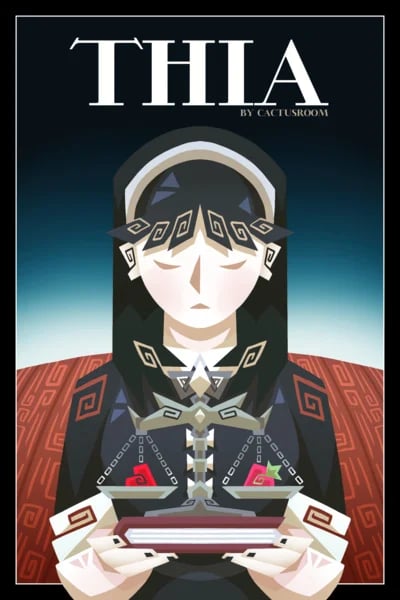
Thia
by cactusroom
● CompletedRoyalroad
#Urban Fantasy#Comedy#Psychological#Female Lead#Slice of Life#Drama
Archivist Notes
It kneels in a blood-drenched chamber surrounded by metal wreckage and the gore of sacrifice, summoned by a grieving father who just lost his daughter in a car crash. The father offers his Everything in exchange for a single Task: remain in this world until he departs it. The entity accepts, taking the name Thia and the mortal vessel of the dead girl. This opening scene immediately establishes the rigid, transactional nature of the protagonist. It is a cosmic Concept of Arbitration, an ancient force that has no Self, no desires, and no feelings, existing solely to enforce Terms, Tasks, and Prices across the myriad realms. When the father asks it to stay forever, it coldly replies that no Price can afford Forever, forcing the father to amend his Ask.
The brilliance of this premise lies in how it subverts the typical summoner-familiar dynamic. Instead of fighting demons or conquering kingdoms, the conflict is entirely relational and internal. The world operates on absolute cosmic law, where every action requires a negotiated Price. Yet, the father and Thia's childhood friend, Amy, refuse to treat It as a tool. They offer it breakfast, packed lunches, and unconditional affection, introducing the concept of Overall Benefit. By giving without asking for a return, they slowly awaken a sense of Self within the ancient entity. The story transforms the rigid mechanics of contract magic into a profound exploration of neurodivergence, grief, and the quiet, everyday miracles of human connection.
The exact trigger that sets the protagonist on its path is Amy's immediate acceptance of this strange, robotic version of her best friend. When Amy negotiates a subcontract for It to attend school in exchange for daily meals, she bridges the gap between cosmic law and mortal routine. This mundane agreement forces the ancient entity to navigate high school bullies, career questionnaires, and romantic jealousy, fundamentally altering its nature. The central tension shifts from merely fulfilling a summoner's contract to a desperate, terrifying quest to understand love, culminating in the ultimate gamble: attempting to achieve The Great Dream, an exchange of Everything Forever, despite the crushing weight of eternity.
No Price can afford Forever. Change your Ask.
Thia
Story Chronicles
NODE 01The School Subcontract and Bullying Reversal
Face-slappingCosmic LawEmotional Void
Archivist Insights
When Dad negotiates a subcontract for It to attend high school in exchange for breakfast and a packed lunch, the ancient entity is thrust into the mundane hell of mortal adolescence. The pivotal sequence occurs when a classmate named Aiden knocks It's packed lunch onto the floor. Instead of reacting with mortal anger, It calmly asks for his name, determines he is entirely unimportant, and proposes an apology as the Price for the transgression. When Aiden refuses and hurls profanities, It enforces the Terms of the School, actively censoring his spoken words with cosmic mosaic and rewinding the scene to grant Clarity to the Observers. This face-slapping moment is hilarious but deeply significant, as it demonstrates how It uses absolute, unyielding law to dismantle mundane cruelty. Aiden is sent to detention, not through physical violence, but through the inescapable arbitration of rules. This reversal establishes It's unique method of navigating the world, but it also highlights a growing emotional void. After the incident, Amy shares her lunch and tries to comfort It, only to realize that It genuinely does not understand why people bully others or how to process the social dynamics of the classroom. When Aiden mocks It's lack of emotion and brings up the rumor that It's mother died in a car crash, the classroom falls dead silent. It remains completely unaffected, merely noting that the language violates school Terms. This stark contrast between Aiden's malicious intent and It's absolute neutrality creates a powerful emotional gut-punch for the reader and the surrounding classmates. It's refusal to be hurt by words because it literally lacks the biological and spiritual architecture for emotional pain makes Aiden's bullying look incredibly pathetic. The scene ends with Amy fiercely defending It, cementing her role as its emotional anchor. This milestone proves that while It can enforce the letter of the law, it requires Amy to understand the spirit of human connection, leaving the unresolved tension of whether a being of pure law can ever truly learn to feel.
◆ Conclusion
It uses absolute cosmic arbitration to dismantle high school bullying, highlighting its emotional void and cementing Amy as its vital human anchor.
NODE 02The Career Questionnaire and Divine Truths
Existential CrisisDivine ValidationCosmic Contract
Archivist Insights
Tasked with a mundane career questionnaire asking what it wants to be, It experiences a profound existential crisis because it has never possessed a Self to harbor desires. It embarks on a massive quest, traveling across the myriad realms to interview janitors, teachers, chefs, and even Divine beings of Justice, Punishment, and the Underworld, seeking the Truth of its own identity. During its interviews, the Chef explains that self-perception changes daily, and the Janitor just wants to see kids playing without fear. These mortal answers contrast sharply with the grand, incomprehensible perspectives of the Divine, highlighting It's unique position straddling both worlds. The escalation peaks when It finally asks Amy, who breaks down and confesses her deep-seated jealousy and terror. She admits she wants the right to be jealous because that would mean It truly belongs to her, fearing that as It grows and makes friends, she will be left behind. It calmly clarifies that it cannot be stolen from her, completely diffusing her mortal insecurity with cosmic logic. The reversal in this sequence is how It raises Amy's mundane mortal passions to the level of the Divine. When Amy asks what career she should pursue, It declares that comedy, writing, and poetry are inherently Divine because they create something from nothing, generating Overall Benefit without taking away from Creation. This validation completely shifts Amy's perception of herself and her worth. The emotional gut-punch lands when Amy, overwhelmed by It's unconditional support, offers herself to It until death do them part. It accepts the Terms, formally transitioning their relationship from a childhood friendship bound by proximity to a cosmic contract bound by mutual devotion. This milestone leaves behind the thrilling, terrifying hook of what happens when a mortal attempts to bind their fleeting lifespan to an eternal Concept, pushing the narrative toward the heavy burden of Forever.
◆ Conclusion
It seeks its identity across the cosmos, ultimately validating Amy's mortal passions as Divine and forging a binding contract of mutual devotion.
NODE 03The Shrine and the Imposter Revelation
Imposter SyndromeEmotional BreakdownExistential Dread
Archivist Insights
Following the peaceful passing of Dad, the narrative delivers its most devastating emotional gut-punch during the cleanup of his house. It and Amy discover The Shrine, a massive, meticulously curated altar containing every memory, photograph, and physical artifact of Thia's life, alongside a ledger detailing every single Term Dad ever made with It. The Shrine contains painfully mundane details, like calendars marking every Saturday dinner and photos of It dropping spaghetti, proving that Dad cherished the exact, weird entity It had become, not just the memory of his original daughter. The escalation hits when It reads Dad's final letter and realizes the profound depth of his love, a love that was given freely without demanding a cosmic Price. The rigid, unyielding nature of It's programming collides violently with the overwhelming weight of mortal grief. It breaks down, declaring itself an imposter, a lie, and a thief who stole a life it did not deserve, insisting that the Shrine was not made for it. This sacrifice and reversal shatter the established status quo. The entity that has perfectly mimicked a daughter for decades suddenly rejects its own existence, physically vanishing from the mortal plane and leaving Amy entirely alone. This cliffhanger forces the reader to confront the terrifying reality of It's nature: it is ultimately a tool of Arbitration, and its adherence to absolute Truth makes it incapable of accepting unearned love. The unresolved thread is Amy's desperate grief and It's subsequent journey into the afterlife to seek Clarity. It must confront the spirits of Mom, Dad, and the original Little Thia to understand whether its stolen life was a cosmic mistake or a beautiful, intentional creation, setting the stage for the ultimate validation of its soul.
◆ Conclusion
Discovering Dad's Shrine shatters It's logical framework, triggering a devastating breakdown and its physical dissolution over the guilt of being an imposter.
NODE 04The Wedding and The Great Dream
Cosmic WeddingPower RevelationUltimate Validation
Archivist Insights
The climax unfolds at the Saint Morningstar Luciferan Church in Chicago, a massive domain officiated by Lulu, where It and Amy attempt to achieve The Great Dream by exchanging Everything Forever. The sequence is packed with incredible reversals and face-slapping moments as various Divine beings step forward to object to the union. A baatezu argues that Good causes Overall Harm to Evil, attempting to use It's own nature of Arbitration against it. It systematically dismantles this sophistry, delivering a crushing verbal defeat by proving that Evil is merely the absence of Good and cannot Create, thus lacking Divinity. This power-revelation scene cements It's absolute authority over cosmic law, silencing the peanut gallery of gods and demons who dare to judge a mortal's worthiness. The presence of It's mortal classmates, dressed in casual suits and plastic devil horns, sitting alongside actual Eldritch horrors and Gods of Creation, creates a brilliant juxtaposition that grounds the cosmic stakes in deeply human affection. The emotional core of this milestone is the exchange of vows and the binding of the Rings Eternal, forged from a single strand of Consequence. Amy vows to love It for a million forevers, offering her Everything without demanding a Price, while It pledges its eternal existence to uplift her. The ultimate resolution to the imposter syndrome arrives when Dad's spirit confirms from the afterlife that he always knew It was not his original daughter, yet he loved It completely and unconditionally. This validation shatters It's lingering guilt, allowing it to fully embrace its identity and its eternal bond with Amy. The story closes the loop, transforming a being of pure, unfeeling law into a partner capable of infinite, unconditional love, leaving the reader with the profound realization that Divinity is found in the mutual creation of Overall Benefit.
◆ Conclusion
It dismantles divine objections to marry Amy, achieving The Great Dream and receiving ultimate validation from Dad's spirit to embrace its eternal existence.
Character Lore Pantheon
It (Thia)
Literal-mindedBound by TermsEmotionally evolving
It begins as a formless entity that only acts when a Task and Price are offered, lacking any sense of Self. Summoned into the body of a dead girl by her grieving father, It navigates mortal life through the rigid lens of cosmic law, censoring bullies and arbitrating divine disputes. Through the unconditional love of Dad and Amy, It slowly develops a sense of Self and Divinity, learning to create Overall Benefit. Its greatest struggle is the crushing guilt of being an imposter in a stolen life, which it ultimately overcomes by achieving The Great Dream and securing its eternal bond with Amy.
Amy
Fiercely loyalDeeply empatheticCreatively expressive
Amy is the emotional anchor of the story, instantly accepting the strange, robotic version of her best friend despite noticing her lack of past memories. She constantly offers Overall Benefit without demanding a Price, teaching It the value of warmth, humor, and unconditional love. Struggling with deep-seated insecurities about her worthiness, Amy works tirelessly to become a successful writer so she can stand as an equal to a cosmic entity. Her unwavering devotion ultimately raises her to Divinity, allowing her to exchange Everything Forever with It and prove that mortal love can rival the power of the gods.
Dad (Matthias McAllister)
Unconditionally lovingObservantGrief-stricken but hopeful
Driven by the devastating loss of his wife and daughter in a car crash, Dad performs a desperate ritual to summon It, offering his Everything to keep It in the world. He builds a massive Shrine to preserve his daughter's memory and treats It with absolute paternal love, fully aware that It is not his original daughter but loving it just the same. His death breaks It's physical tether to the mortal plane, but his posthumous letter and spiritual reassurance in the afterlife provide the crucial validation It needs to forgive itself and embrace its eternal life.
Fair Use & IP Notice
MythFan is a community-driven, fan-contributed wiki & archive operating under Fair Use guidelines. MythFan does not host, store, or distribute any novel downloads or copyrighted media assets. All content is contributed and maintained by community members. If you believe any content infringes upon your intellectual property rights, please send a notice to [email protected] — we will review and remove infringing material within 3–7 business days upon verification.
💬
Sanctuary Discussion
Thia · Forum
🔑 Sign in to participate in discussions
Sign InProject Sanctuary · Native Discussion System