📊 Editorial Consensus89%
The Game at Carousel
by lost_rambler
● OngoingRoyalroad
#LitRPG#Urban Fantasy#Progression#Strategy#Male Lead#Adventure
Archivist Notes
The world of The Game at Carousel unfolds with a chilling inversion of expectation, dragging its unsuspecting protagonists from the mundane familiarity of a college road trip into a meticulously crafted horror-LitRPG nightmare. Riley Lawrence, the self-professed Film Buff, embodies the quintessential outsider, a young man rarely invited to social events, whose quiet enthusiasm for a lake house getaway quickly sours into palpable dread. What begins as a journey to reconnect with Antoine’s long-lost brother, Christian, rapidly devolves into a descent through layers of unsettling anomalies: a nervous driver, dead cell signals, and an abandoned parking lot filled with relics of forgotten time. The narrative masterfully blends the conventional tropes of a slasher film setup with the emergent mechanics of a video game, hinting at a reality far more sinister than any horror movie Riley has ever analyzed.
The true nature of their predicament crystallizes with the appearance of Silas the Mechanical Showman, an animatronic fortune teller that dispenses not fortunes, but "tickets"—digital archetypes like Film Buff, Scholar, and Eye Candy, complete with stats, abilities, and the ominous "Plot Armor." Riley's "red wallpaper" vision, a nascent game interface overlaid on reality, confirms the horrifying truth: they are not on vacation, but trapped in a living game orchestrated by a malevolent, sentient entity named Carousel. The initial guides, Valerie, Todd, and Arthur, far from being welcoming hosts, are revealed as orchestrators of a cruel initiation, confessing that Christian Stone himself is a long-lost victim, now a pawn in Carousel's twisted narrative. This revelation shatters any illusion of a normal summer trip, replacing it with the stark reality of a deadly performance where survival hinges on understanding and manipulating the very rules of horror.
The game's insidious depth is immediately underscored by the "zookeeper's voice" trope, a psychic pacification mechanism used by the guides to keep players compliant and prevent panic, as demonstrated by Janet Gill's frantic but futile attempt to escape. Carousel's world is a patchwork of recycled storylines, each a deadly gauntlet players must navigate. Riley, armed with his "Trope Master" ability, begins to decipher the hidden rules of this cinematic prison, realizing that his extensive knowledge of horror is now his most potent, albeit double-edged, weapon. The world is a stage, the players are actors, and the audience, an unseen force, demands a show—a show where death is not the end, but merely a plot point in Carousel's unending, terrifying production.
My friends and I are going to die here, but I’ll die more times than them, I think.
The Game at Carousel: Book Four Stubs July 17th (Arc II Chapters 1- 85)
Story Chronicles
NODE 01Initiation into the Living Game
LitRPGHorrorArchetypesSentient WorldForced Participation
Archivist Insights
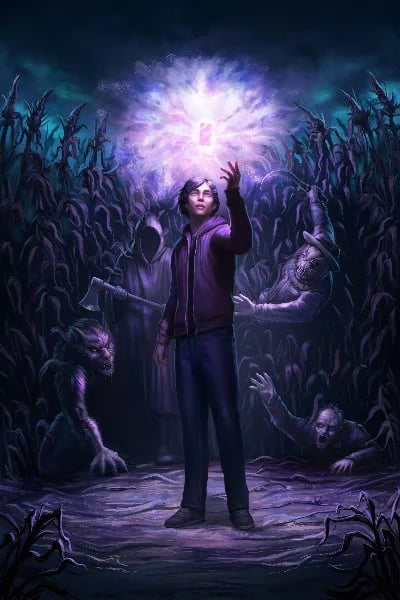
The journey to Carousel, initially framed as a mundane college road trip to Antoine Stone's brother Christian's lake house, quickly morphs into a chilling descent into a hybrid horror-LitRPG reality. Riley Lawrence, the narrative's observational Film Buff, finds himself and his friends entangled in a meticulously crafted game world, orchestrated by a sentient entity known as Carousel. The first major turning point occurs with the group's arrival at an abandoned parking lot, devoid of life save for old, decaying vehicles, signaling an immediate departure from normalcy. Inside a decrepit "EMPLOYEES ONLY" building, the animatronic Silas the Mechanical Showman dispenses "tickets"—each a character archetype complete with stats, abilities, and "Plot Armor"—solidifying the game-like nature of their entrapment. Riley's "Film Buff" archetype, granting him meta-awareness through a "red wallpaper" UI, allows him to perceive game mechanics like character stats, enemy tropes, and storyline objectives. The subsequent encounter with the enigmatic "guides," Valerie, Todd, and Arthur, shatters any lingering illusions, as they reveal Carousel's true purpose: a deadly game where Christian is a long-lost prisoner, and escape is contingent upon completing terrifying "storylines." This abrupt shift from leisurely vacation to forced participation is brutally emphasized when a terrified NPC, Samantha, is revealed as part of a "Permanent Vacancy" storyline, and the guides' "zookeeper's voice" trope is deployed to suppress the players' panic. The initial storyline, "The Final Straw II," set in a corn maze, introduces core game rules and the concept of "Omens," culminating in Dina Cano's defiant act of smashing a pumpkin, a direct challenge to the game's "Territorial" monster, plunging the players deeper into Carousel's inescapable narrative.
◆ Conclusion
Protagonist Riley and friends are unwillingly initiated into Carousel, a meta-horror game world with deadly rules.
NODE 02Betrayal, Death, and Meta-Realities
Player DeathsMetagamingBetrayalGhost StoryTropes
Archivist Insights
The narrative intensifies with the introduction of new players, Isaac and Cassie Hughes, siblings searching for their missing brother Andrew, drawing Riley's team into the perilous "Ten Second Game" storyline. This phase is marked by escalating stakes and the gradual unraveling of Carousel's deceptive layers. After a jarring "Project Rewind" reset, Riley's team, now with heightened meta-awareness, attempts to convince the skeptical newcomers of their predicament. A chilling visit to a cemetery, littered with reanimated undead, finally breaks Isaac's disbelief, forcing him to confront the "red wallpaper" reality. The titular "Ten Second Game," a séance ritual played in Jed Geist's old manor, becomes the vehicle for direct interaction with Carousel's spectral inhabitants. Riley and Bobby's encounter with the armless ghost, followed by the Stranger's dramatic reveal of his "Dark Secret"—his complicity in sacrificing new players for his daughter Sidney—escalates the tension. The storyline plunges into chaos with the brutal deaths of Kimberly and Cassie, their lives extinguished through grotesque acts of choking and mutilation, amplified by Cassie's "The Anguish" trope. The emergence of Strander Blake, the monstrous entity capable of possessing ghosts and seeing players' tropes, solidifies the immediate threat. Antoine's grief-fueled rage leads him to attack the Stranger, demonstrating the raw emotional toll of the game. Despite the horror, the players are rewarded with new tropes and licenses, including the ability to summon spectral dogs and manipulate storylines, underscoring Carousel's transactional nature and setting the stage for deeper meta-narrative exploration and the grim pursuit of rescue.
◆ Conclusion
Player deaths and a shocking betrayal reveal deeper game mechanics and the personal stakes within Carousel's narratives.
NODE 03Unveiling Carousel's Twisted History and Experiments
Time LoopMurder MysteryGenetic ExperimentationVillain MonologueHistorical Lore
Archivist Insights
The story pivots to the "Cold-Blooded Things" storyline, a complex murder mystery interwoven with the ongoing struggle against Carousel's machinations. A crucial revelation of a "continuity loop" shatters the linear perception of time, forcing players to confront the fact that they are perpetually stuck on the "day before the Centennial." This loop, they deduce, began a year after Jed Geist's murder in 1992, creating a temporal anomaly that Carousel exploits. Police Chief Kurt Willis, a GI Paragon, becomes a temporary ally, offering insights into Carousel's inner workings and the "true ending" paths for storylines. Their investigation leads them to City Hall's flooded Cold Case Museum, where Jed Geist's murder is revealed to be a cold case from "three years ago," further disorienting the timeline. Here, the players discover Dr. Howard Halle's connection to Jed Geist through an oxycodone prescription and a business card, leading them to the Hallowed Heart Hospital. Dr. Halle, a "Mad Doctor" archetype, is revealed as a key antagonist, conducting grotesque experiments with "Ichor" and animal-human hybrids. Riley's own mutilation and subsequent "Mostly Intact" transformation, along with Isaac's more severe disfigurement, expose the horrifying consequences of Halle's research. The true identity of Cecilia, the veiled woman, is unveiled as Lillian Geist, a disfigured survivor of the 1984 Geist Manor fire and Jed's killer, whose "Flashback Monologue" reveals a history of torment and Carousel's manipulative design. The climax sees Lillian's vengeful attack on Halle, triggering a chaotic confrontation with "Skin Frogs" and other hybrids, forcing the players to escape through the sewers and leaving them with more questions about Carousel's elusive architects.
◆ Conclusion
A complex storyline reveals Carousel's continuity loop, the villain's tragic origins, and grotesque scientific experiments linked to the town's history.
NODE 04The Hunt for the Murder Weapon and Game Origins
Continuity LoopMurder WeaponSéanceGame MechanicsMeta-Narrative
Archivist Insights
Following the harrowing "Cold-Blooded Things" storyline, the players find themselves back in the continuity loop, still trapped on the day before the Centennial, but now armed with crucial knowledge and new objectives. The "two weeks" of downtime, as advised by Willis, is interpreted as a grace period before the game compels them into another storyline, a time to strategize. Their primary goal: find the fireplace poker, the true murder weapon used by Lillian Geist to kill Jedediah, which is essential for performing a séance and interrogating his spirit. This quest is complicated by Carousel's subtle manipulations, such as the constantly shifting dates on the historical displays and the absence of the poker from its logical location. Madam Celia, the Psychic Paragon, provides cryptic clues during a forced reading, revealing a "mystery woman" who, a year after Jed's death, stole the poker and attempted a ritual to "change the past" and save victims of the 70th-anniversary disaster. This revelation links the murder weapon to the very inception of the continuity loop and introduces the tantalizing possibility of rewriting Carousel's history. The team acquires the "Reply the Departed" board game from Tar Bellows' pawn shop, an Omen for a low-difficulty storyline set in Jed Geist's original, dilapidated manor. As they prepare to play the game amidst a chaotic array of weapons and newly introduced NPCs, Antoine's first question, "Did the Film Buff kill you?", causes the bell to ring, and Riley senses the distinct smell of ash and cigarettes, hinting at a connection to his own past and the deeper, personal stakes woven into Carousel's intricate, ever-expanding narrative.
◆ Conclusion
Players unravel the complex timeline and seek the murder weapon to contact Jed Geist, revealing Carousel's deeper historical manipulations.
Character Lore Pantheon
Riley Lawrence
AnalyticalObservantIntroverted
Riley is the reluctant protagonist, a college student whose extensive knowledge of horror films becomes his primary tool for survival in Carousel, a sentient game world. Initially overwhelmed, his "Film Buff" archetype grants him unique meta-awareness, allowing him to perceive game mechanics like "red wallpaper" UI, enemy tropes, and plot cycles. His trump cards, "Trope Master" and "Cinema Seer," enable him to analyze threats and strategically buff allies, while "Oblivious Bystander" allows him to evade direct attacks by feigning ignorance. Riley navigates a series of deadly storylines, enduring physical mutilation and witnessing the deaths and resurrections of his friends. He is instrumental in uncovering Carousel's time manipulation, Dr. Halle's grotesque experiments, and Lillian Geist's tragic backstory. Despite his personal fears and self-doubt, he evolves into the team's intellectual leader, constantly devising complex plans to exploit the game's rules, rescue his companions, and unravel the overarching mystery of Carousel's origins.
Antoine Stone
LoyalProtectiveResilient
Antoine is Riley's close friend and the group's physical powerhouse, drawn into Carousel while searching for his long-lost brother Christian. His "Athlete" archetype provides significant physical prowess and a "Gym Rat" trope for combat buffs, making him the team's go-to fighter. However, he grapples with profound psychological trauma from an unspecified "fate worse than death" suffered in the Straggler Forest, which his "You were having a nightmare..." trope attempts to suppress. This trauma often leaves him emotionally vulnerable, leading to moments of incapacitation and explosive rage, particularly after Kimberly's death. His unwavering loyalty to his friends, especially Kimberly, drives his actions, often making him protective to the point of recklessness. Antoine's journey is marked by a deep emotional struggle against his past and the constant threat of Carousel's psychological torment, even as he dedicates himself to the collective goal of rescue and survival.
Lillian Geist / Cecilia
VengefulMutilatedObsessed
Lillian Geist, initially encountered as the veiled "Cecilia," is a central and tragic antagonist whose life is deeply intertwined with Carousel's history. Once a beauty queen from the town's founding family, she was horrifically disfigured in the 1984 Geist Manor fire. She became a subject of Dr. Howard Halle's unethical "Ichor" experiments, which left her with wriggling caecilians grafted to her face. Driven by a thirst for revenge and a warped perception of her family's "curse," she murdered her uncle Jedediah Geist, an act that inadvertently triggered the "continuity loop" trapping Carousel in perpetual time. Her "Don't Wake the Beast" trope hints at her volatile nature, while her "Flashback Monologue" reveals her profound suffering and Carousel's long history of manipulation. Lillian embodies the deep-seated horror within Carousel, a victim turned villain whose story is critical to understanding the "Throughline" and the true, dark origins of the game world.
Fair Use & IP Notice
MythFan is a community-driven, fan-contributed wiki & archive operating under Fair Use guidelines. MythFan does not host, store, or distribute any novel downloads or copyrighted media assets. All content is contributed and maintained by community members. If you believe any content infringes upon your intellectual property rights, please send a notice to [email protected] — we will review and remove infringing material within 3–7 business days upon verification.
💬
Sanctuary Discussion
The Game at Carousel · Forum
🔑 Sign in to participate in discussions
Sign InProject Sanctuary · Native Discussion System