📊 Editorial Consensus89%
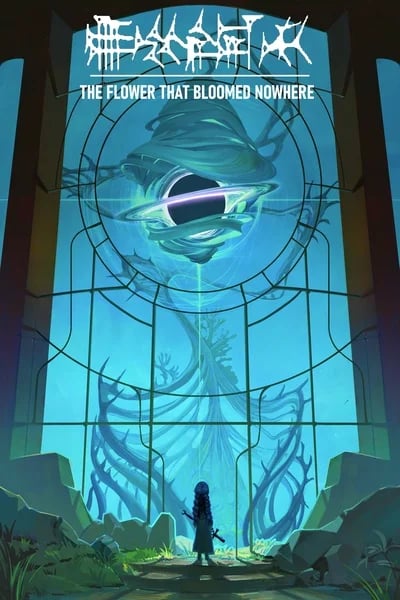
The Flower That Bloomed Nowhere
by Lurina
● OngoingRoyalroad
#Time Loop#Anti-Hero Lead#Strategy#Psychological#Female Lead#Fantasy
Archivist Notes
The story unfolds in the Mimikos, a colossal artificial world built as a fragile refuge for humanity after the collapse of the old cosmos. In this strange reality, the laws of physics are maintained by ancient, complex math and the mysterious Tower of Asphodel. True iron has vanished from the earth, existing only within the blood of human beings, making their very bodies a walking paradox. Against this background of systemic decay, the protagonist, Utsushikome of Fusai, struggles with a deep, personal trauma. The sudden, unceremonious death of her grandfather shattered her belief in a meaningful reality, driving her to study Thanatomancy, the magic of decay and death. She seeks a way to reverse the ultimate finality of mortality, hiding her desperate quest behind a mask of cynical self-loathing and social cowardice.
But her journey is not a simple academic pursuit. The narrative reveals a hidden, reality-bending mechanism that governs her life. Before the timeline resets, she stands in a frozen street outside her carriage, facing an expressionless porcelain-masked figure. A contract is recited, elevating her from a passive bystander to the heroine of a tragic scenario. She is granted the power to loop through time, tasked with identifying a hidden opponent and preventing a looming slaughter. This loop trigger, framed as a systematic attempt with strict control parameters, resets her to the first day of her journey. Armed with this hidden loop and a profound talent for entropic mathematics, she must navigate a web of academic politics, historical grudges, and the paranoid secrets of the Order of the Universal Panacea.
As she boards the carriage to attend a prestigious medical conference, her mind is a battlefield of suppressed memories and quiet desperation. The world around her is on the brink of a quiet collapse, with political tensions from a recent revolution still simmering beneath the surface. Her unique cheat is not a weapon of overt power, but a heavy burden of foreknowledge and analytical observation. To save her companions and find a cure for her own hidden affliction, she must piece together the clues scattered across a series of increasingly bizarre environments, from the heights of the Empyrean Bastion to the dark depths of an underwater sanctuary.
Sooner or later, something will happen to everyone that will make them hate that people have to die.
The Flower That Bloomed Nowhere
Story Chronicles
NODE 01The Ascent and the Hidden Agenda
transplanar travelacademic conspiracyhidden warning
Archivist Insights
The journey begins with a deceptive sense of normalcy as Utsushikome and her pragmatic companion, Ran, traverse the bustling streets of Old Yru to attend a high-profile academic press conference. Beneath her quiet, self-deprecating exterior, Utsushikome is hiding a secret letter from an old family friend, revealing that the legendary Egomancer, Samium of Ur-Ysar, is being kept alive in the secret sanctuary of the Order of the Universal Panacea. This revelation transforms a simple academic excursion into a high-stakes rescue mission, as Samium is the only person who might hold the key to curing Utsushikome's own deeply buried affliction and explaining her grandfather's dark past. At the Academy of Medicine and Healing, the smug Headmaster Ishkibal parades the class of prodigies before a crowd of elite investors, while the ambitious class representative, Kamrusepa, delivers a bold speech about defeating death that makes the traditionalist audience visibly uneasy. The group is soon split by gender under the guise of security protocols, and Utsushikome boards the massive Aetherbridge lift to ascend to the Empyrean Bastion. During the ascent, she tries to distract her anxious classmates with a series of dark, botched jokes, barely concealing her own growing dread as the lift undergoes a reality-bending transposition process. Looking out into the starry void of the Empyrean, she spots a fleeting, impossible anomaly clinging to the underside of the bastion—a dark, spider-like shape that vanishes in a split second, leaving her to wonder if they are being watched by something that defies the very laws of life in a vacuum. Upon arriving at the bastion, the tension increases when they are forced to surrender their scepters to a heavily armed security force, stripping them of their immediate defensive capabilities. As they navigate the labyrinthine, ancient streets of the fortress, Utsushikome realizes that the safe, predictable world of the academy is rapidly fading behind them, replaced by a web of paranoid security measures and hidden agendas that threaten to swallow them whole.
◆ Conclusion
Utsushikome discovers a secret motive to find a dying Egomancer, turning a school trip into a desperate mission.
NODE 02The Gateway to the Sunken Sanctuary
transplanar teleportationmythological symbolismsensory deprivation
Archivist Insights
The mystery deepens as the girls are escorted through the abandoned, vandalized lower levels of the Empyrean Bastion by a silent, heavily veiled driver who refuses to reveal his face or identity. He leads them to a primeval, subterranean ruin that predates modern civilization, featuring bizarre fertility idols and a colossal, weathered statue of a nameless man reaching for the heavens. At the end of this ancient hall lies the Nadir Gateway, a room that has no floor, opening directly into the terrifying void of the Empyrean with the planet Mimikos shimmering thousands of miles below. Despite the lack of any physical barrier, the air is held in place by an incredibly complex, energy-intensive enchantment that defies conventional physics, forcing the terrified travelers to step onto a path of hovering black tiles that materialize only when they advance. In the center of this void, they sit on a suspended platform beneath a beautiful, hypnotic mural that depicts a circular, looping version of the Epic of Gilgamesh, where the hero is doomed to repeat his quest for immortality in an endless cycle of death and rebirth. The circular nature of the painting triggers a profound sense of unease in Utsushikome, who senses a quiet, mocking contempt woven into the very brushstrokes of the art. Suddenly, the platform undergoes a jarring transplanar teleportation process that leaves their minds temporarily suspended in a dark, silent void where time itself ceases to hold any meaning. When they regain their senses, they find themselves in the Sanctuary of Apsu, a massive, glass-domed greenhouse built at the bottom of a pitch-black, high-pressure ocean on the lower plane of Atelikos. The transition is so violent that the gentle Ophelia immediately collapses and vomits on the floor, while Utsushikome is seized by a terrifying sense of deja vu, realizing that the layout of the sanctuary and the timing of the events are matching a sequence of memories she has no rational way of possessing.
◆ Conclusion
The group reaches an impossible underwater sanctuary, where Utsushikome is haunted by unnatural memories of events she has not lived.
NODE 03The Everblossom and the Rebel's Grudge
arcane combatpolitical polarizationsystemic decay
Archivist Insights
While exploring the sanctuary, Utsushikome wanders into a sealed, water-filled section of the arboretum and discovers the Nittaimalaru, a gargantuan, alien-like biological construct resembling a twisted, oil-slicked tree that is engineered to survive the crushing pressure of the ocean floor. Here, she is ambushed by her brilliant former mentor, Neferuaten, who instigates a rapid-fire magic duel to test her reflexes and improvisation skills. Utsushikome manages to win through a desperate, unorthodox physical tactic, biting her own finger to bridge their bloodlines and bypass Neferuaten's anatomical defenses with a life-slaying incantation. Their reunion is cut short when they return to the main building and find the servant, Yantho, collapsed in the kitchen, while the adjacent pantry has been subjected to a localized time-acceleration anomaly that has rotted all the food and covered the walls in thousands of mysterious tally marks. This unsettling discovery casts a shadow over the evening dinner, where political tensions explode between Bardiya, a cynical veteran of the bloody Ikkaryonic revolution, and Durvasa, a pro-Alliance Biomancer who defends the state's brutal pacification campaigns. As the two clash over the morality of the ruling gerontocrats and the unequal distribution of life-extending therapies, the ambitious Kamrusepa aggressively takes Durvasa's side to protect her own career prospects, sparking a bitter argument that tears the social fabric of the class apart. The atmosphere is shattered when the child prodigy, Lilith, coldly declares that all arcanists are murderers anyway, silencing the room with a chilling reminder of the violent history that built their comfortable society. Retreating to her room in a state of exhaustion, Utsushikome performs her nightly acclimation exercises, recording her thoughts in a secret journal while struggling to maintain her sanity against a growing conviction that she is trapped in a repeating loop of tragedy.
◆ Conclusion
A localized time anomaly and a bitter political dispute expose the deep fractures within the class and the sanctuary's unstable environment.
Fair Use & IP Notice
MythFan is a community-driven, fan-contributed wiki & archive operating under Fair Use guidelines. MythFan does not host, store, or distribute any novel downloads or copyrighted media assets. All content is contributed and maintained by community members. If you believe any content infringes upon your intellectual property rights, please send a notice to [email protected] — we will review and remove infringing material within 3–7 business days upon verification.
💬
Sanctuary Discussion
The Flower That Bloomed Nowhere · Forum
🔑 Sign in to participate in discussions
Sign InProject Sanctuary · Native Discussion System