📊 Editorial Consensus89%
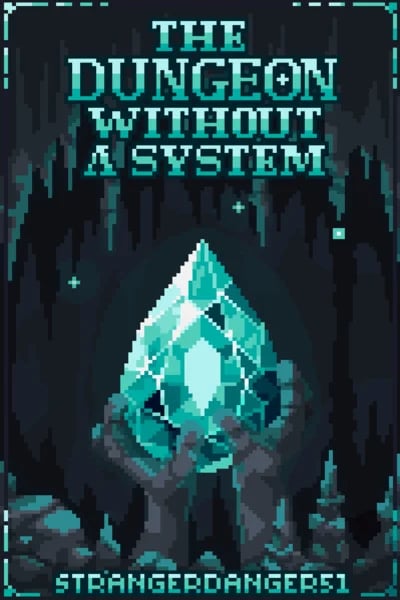
The Dungeon Without a System
by StrangerDanger51
● OngoingRoyalroad
#Portal Fantasy / Isekai#Progression#Multiple Lead Characters#Strong Lead#Adventure#Fantasy
Archivist Notes
The narrative opens not with a grand revelation, but a disorienting, almost meditative drift into consciousness, a sensation of floating that quickly curdles into existential dread. Our protagonist awakens to find himself not in a familiar bed, but as a three-inch, tear-drop cut Teal Sapphire, devoid of a human body, surrounded by an alien ocean. This jarring, almost Lovecraftian body horror quickly morphs into a unique brand of LitRPG and Progression Fantasy. The initial panic of being an immobile gem gives way to a flicker of memory, a self-aware whisper asking "Was I a Dungeon?". This question is the genesis of his new existence, thrusting him into a world where sentient mineral formations defend twisting caverns with constructs of mana. However, this emergent sentience is immediately confronted by a defining reversal: the expected "system," a ubiquitous cheat in this genre, is absent. "Bugger. Nothing worked. Wherever I was, I didn't have a system," he laments, setting the stage for a gritty, self-reliant progression.
Stripped of the conventional scaffolding of his genre, the protagonist, now identifying as a Dungeon Core, must forge his own path to power. His initial experiments are rudimentary, driven by a human intellect grappling with alien physiology. He discovers a 360-degree mana-vision, a rudimentary "breathing" technique to absorb ambient mana, and the ability to form shimmering orbital rings of energy. The first true cheat-trigger, born of frustration, is the accidental infusion of a seagull with his mana, converting its life force to his own and granting him proxy control and sensory input. This revelation is pivotal, quickly followed by the profound understanding that he can extend his consciousness and control to the very rock and sand of his volcanic island cave, becoming the dungeon physically. This unique origin story blends classic transmigration tropes with a deeply immersive base-building mechanic, as the protagonist literally becomes the world he seeks to master, all while navigating a universe that expects a "system" he doesn't possess. His journey is one of ingenious self-discovery, where every new ability is painstakingly learned through trial and error, not granted by a convenient interface.
Bugger. Nothing worked. Wherever I was, I didn't have a system.
The Dungeon Without a System
Story Chronicles
NODE 01First Blood and Knowledge Assimilation
First ContactMana InterferenceMemory AbsorptionDungeon DefenseGuilder Conflict
Archivist Insights
The tranquil solitude of the Dungeon Core's nascent existence is shattered by the unexpected arrival of a merchant ship, propelled off course by a storm. This intrusion forces the Dungeon to accelerate its development from passive self-discovery to active self-defense. Hastily, it carves out its first cavern, illuminates it with a beacon-like mana-star—a small sun of ghostly teal light—and populates it with mana-mutated crabs. These range from camouflaged Assassin Crabs, molded to blend seamlessly with the cave walls, to heavily armored Crab Brawlers, and the formidable Crab Knight, Sebastian, all overseen by the Core itself. The ensuing confrontation is a brutal awakening for both sides. The Dungeon discovers, to its dismay, that human presence disrupts its direct mana control, rendering it unable to directly influence mana near them. This forces a reliance on its monstrous creations for defense, a critical vulnerability it must overcome. In a series of shocking reversals, Sebastian, exhibiting unexpected cunning and loyalty, slays two Guilders, Kurt and Kale. This act, initially a simple defensive measure, becomes a pivotal moment of forced evolution for the Dungeon. Upon their deaths, the Dungeon absorbs fragments of their memories and language, gaining invaluable insight into the wider world, its inhabitants, Guilder society, and the terrifying existence of "Lost Dungeons" and their potential for conquest or destruction. It learns about Guilder ranks, healing potions, and the inherent dangers it faces. This assimilation of knowledge, born of violence, propels the Dungeon into a proactive defensive stance, realizing the existential threat it faces and the need for ever more elaborate defenses and strategic thinking. The game, as the Dungeon narrator grimly observes, is now truly afoot, irrevocably altering its path from isolated self-experimentation to a desperate fight for survival against an encroaching, mana-aware civilization that views it as either a resource to exploit or a threat to be shattered for a bounty.
◆ Conclusion
Dungeon learns about the outside world and its own vulnerability through combat, assimilating enemy knowledge.
NODE 02Accelerated Evolution and Strategic Dungeon Design
Dungeon ExpansionMonster MutationEnchantment CraftingStrategic TrapsPrisoner Capture
Archivist Insights
Galvanized by the initial Guilder encounter and the rapidly escalating bounty placed upon its core, the Dungeon embarks on an accelerated campaign of expansion and monster evolution, driven by a newfound strategic imperative. It rapidly carves out multiple floors, each meticulously designed with a distinct theme and escalating environmental hazards: the confounding Flooded Labyrinth, teeming with electrified fish; the oppressive Green Hell, a humid jungle filled with venomous insects and sapient Kobolds; and the claustrophobic Ratten Warren, a sewer network infested with diverse, warring rat clans. This period is marked by relentless experimentation with mana, transforming diverse fauna—from fish to lizards to rats—into unique, often terrifying, monster breeds, each with specialized abilities and roles. The Dungeon learns to imbue creatures with mana cores, granting them enhanced abilities, elemental magic, and even rudimentary sentience, giving rise to agile Arrowfish, vicious Bloodfish, adaptable Kobold Shamans and Hunters, and the myriad, warring Ratten clans. Crucially, the Dungeon develops sophisticated enchantments: mana-infused healing water, dynamically shifting maze walls, and intent-based traps that selectively target those seeking its destruction, while allowing others easier passage. The introduction of respawn crystals for its most powerful bosses, beginning with Mushu, the Drake-Kin, signifies a major leap in its defensive capabilities, ensuring its guardians are undying and continuously learning. This era culminates in the capture of several Platinum-ranked Guilders, a bold move driven by scientific curiosity and a chilling detachment, setting the stage for direct experimentation and a deeper understanding of its enemies' physiology and magic, even as it struggles with the moral implications of its actions.
◆ Conclusion
Dungeon rapidly develops complex defenses, diverse monsters, and advanced magic, driven by self-preservation and curiosity.
NODE 03First Contact and Uneasy Diplomacy
Diplomatic OvertureSapient MonstersDungeon CommunicationMorality ShiftInformation Exchange
Archivist Insights
The Dungeon's increasingly sophisticated defenses and adaptive strategies culminate in a pivotal moment of direct interaction with the Guild. Guildmistress Layla Losat, recognizing the Dungeon's unusual intelligence and adaptability—evidenced by its selective lethality and architectural anomalies—initiates a daring diplomatic mission, seeking dialogue rather than outright destruction. The Dungeon, initially hesitant due to its ingrained instincts of self-preservation and a deep-seated fear of conquest, agrees to communicate. It possesses a Kobold Shaman, Lika, modifying her vocal cords to speak perfect Phenocian, allowing for direct, albeit mediated, conversation. This first contact is a delicate dance of veiled truths and calculated concessions, where the Dungeon leverages its perceived "ancient" status and self-taught wisdom. A groundbreaking contract is established: in exchange for answering three questions weekly, the Dungeon receives breeding pairs of unencountered animal species, which it eagerly monsterizes. This unprecedented negotiation reveals the Dungeon's evolving "morality," a complex interplay between its primal defensive instincts and its lingering human desire for interaction, creation, and even a form of artistic expression. It confesses to holding Guilder prisoners, a revelation that shocks Layla but also subtly reinforces its power and enigmatic nature, hinting at deeper, more disturbing experiments. This milestone marks a profound shift from purely hostile engagement to a cautious, mutually beneficial (for now) relationship, as the Dungeon explores the boundaries of its identity—a conscious entity grappling with god-like power, the legacy of its past human self, and the unforeseen consequences of its actions on the world above. The inherent conflict between its nature as a dungeon and its human intellect creates a unique narrative tension, questioning what it truly means to be alive.
◆ Conclusion
Dungeon engages in diplomacy, revealing its complex sentience and securing resources through negotiation, not just combat.
NODE 04The Threat Escalates and Grand Ambitions
Bounty EscalationGlobal ThreatEnvironmental ExpansionElemental EvolutionStrategic Fortification
Archivist Insights
The fragile peace established through diplomacy is immediately jeopardized by the escalating bounty on the Dungeon's core—now a staggering twenty thousand gold—and the subsequent influx of powerful Guilders from across the Phenoc Kingdom and the rival Bahrain Empire. This "Grindstone" status attracts an overwhelming force of Gold and Platinum ranked adventurers, including legendary figures, forcing the Dungeon to once again dramatically escalate its defensive capabilities. It perfects new, lethal environmental and magical traps, implements teleport interdiction circles to prevent any escape, and continues to rapidly evolve its monster ecosystem. This period sees the creation of terrifying new species: the venomous Scorpans, the majestic Thunderbirds, the cunning Ice Foxes, and the hardy Snowbolds, each meticulously designed for specific, hostile environments like the treacherous Storm-Swept Peaks, the sprawling Desert Canyon, and the fertile Plains. The Dungeon's architectural ambitions also soar, as it carves out vast, breathtaking new floors, complete with simulated day-night cycles and complex ecosystems. Simultaneously, it expands its influence beyond the subterranean, claiming the entire ocean floor around Medea Island as its "Zeroth Floor," granting it direct control over whales, sharks, and the legendary Kraken and Sea Serpent, transforming the very currents to its will. The Dungeon's internal development continues with the transformation of mana-sprites into powerful, sentient Elementals, the forging of mythical metals like Potentium, and the ongoing, morally ambiguous experimentation with Guilder prisoners—a chilling scientific pursuit to understand and overcome human interference. As external threats mount, the Dungeon, now a formidable, multi-layered entity, prepares for an inevitable, existential war, solidifying its place as a world-altering force. The stakes are higher than ever, with the fate of an entire colony and potentially the wider political landscape hanging in the balance.
◆ Conclusion
Dungeon faces overwhelming external forces, prompting massive expansion, monster diversification, and global-scale influence.
Character Lore Pantheon
The Dungeon Core
CuriousAdaptiveStrategic
The protagonist, a human consciousness transmigrated into a Teal Sapphire, is the Dungeon Core itself. Initially disoriented and lacking a conventional "system," it meticulously learns to manipulate mana, grow its physical form (the dungeon), and create diverse monster species. Driven by a blend of human curiosity and dungeon instincts for self-preservation, it evolves from simple defenses to complex, multi-layered floors with unique ecosystems, advanced enchantments, and sapient monsters. The Dungeon assimilates knowledge from fallen Guilders, engages in uneasy diplomacy, and experiments with both its creations and its captives, grappling with its shifting morality and growing god-like power. Its ultimate goal is to showcase its artistic creations while maintaining distance from potential exploiters, transforming into a world-altering entity.
Layla Losat
IntelligentObservantDiplomatic
As the Guildmistress assigned to Medea Island, Layla is the primary human interface with the Dungeon. A mana-seer, she quickly discerns the Dungeon's extraordinary intelligence and adaptive nature, advocating for diplomacy rather than outright destruction despite the bounty. She negotiates a unique contract with the Dungeon, exchanging information and new animal species for answers, navigating the complex political landscape of the Guild and nobility. Layla faces immense pressure to manage the influx of Guilders, maintain order, and protect the burgeoning colony, all while grappling with the ethical implications of the Dungeon's actions and the existential threat it represents.
Isid Losat
ExperiencedCautiousPerceptive
Layla's aunt and a highly experienced Platinum Guilder, Isid is a formidable mana-seer whose abilities allow her to perceive the intricate flows of mana within the Dungeon. She is one of the first to recognize the Dungeon's unique intelligence and adaptive defenses, serving as a crucial source of information and strategic insight for Layla. Despite her own injuries and losses to the Dungeon, she approaches it with a blend of caution and scientific curiosity. Isid is a loyal family member and a respected figure within the Guild, providing both combat prowess and intellectual guidance to her niece and fellow delvers.
Fair Use & IP Notice
MythFan is a community-driven, fan-contributed wiki & archive operating under Fair Use guidelines. MythFan does not host, store, or distribute any novel downloads or copyrighted media assets. All content is contributed and maintained by community members. If you believe any content infringes upon your intellectual property rights, please send a notice to [email protected] — we will review and remove infringing material within 3–7 business days upon verification.
💬
Sanctuary Discussion
The Dungeon Without a System · Forum
🔑 Sign in to participate in discussions
Sign InProject Sanctuary · Native Discussion System