📊 Editorial Consensus89%
The Dungeon Child
by Angry Spider
● CompletedRoyalroad
#Reincarnation#Strategy#Comedy#Psychological#Male Lead#Mystery
Archivist Notes
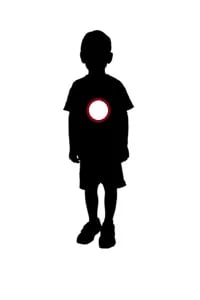
Argus, a century-old dungeon core who commanded a level 130 boss spider across a hundred floors, is smashed to pieces by a grieving adventurer's hammer. He wakes up not in a void, but in a blurry, pathetic human infant body, forced to endure the indignity of breastfeeding and the slow, agonizing crawl of human development. The world he lands in is a mundane Earth completely devoid of ambient mana or a System interface. His cheat is not a magical menu, but his retained dungeon consciousness: the ability to perceive molecular structures, manipulate space, and infuse living creatures with mana to create minions, all while trapped in a chubby, uncoordinated six-year-old frame with aniridia that makes his eyes look like terrifying black voids.
The true trigger for his character arc is not a power-up, but a devastating emotional gut-punch. When his abusive father, Frank, throws his first enhanced spider minion, Thesis, into the garbage, Argus experiences a system shock of pure human grief. He cannot summon a boss monster to exact revenge; he can only cry into his carpet. Guided by his fiercely protective Mother, Anna, and his empathetic friend Charlie, who teaches him how to bury his feelings in a literal box in the yard, Argus learns love and vulnerability. This emotional tether to his human family becomes the driving force of the narrative, transforming a cold, calculating dungeon core into a fiercely protective son.
The magic system operates on a strict biological and spatial economy. Because Earth lacks ambient mana, Argus must manually dungeonify physical spaces, like his bedroom or his elementary school, converting their very dimensions into mana-generating territory. He uses a stolen smartphone to access Omnipedia, downloading real-world anatomical blueprints to surgically enhance his minions, turning a common trapdoor spider into a supersonic assassin and a garden snake into a massive, scale-armored leviathan. Every spell cast and every monster upgraded drains his limited internal reserves, forcing him to balance his cosmic ambitions with the mundane reality of hiding his powers from his kindergarten teacher while secretly converting the school's foundation into a subterranean insectoid hive.
I am neither an immobile dungeon core, nor a helpless child. I am a dungeon child.
The Dungeon Child
Story Chronicles
NODE 01The Death of Thesis and Human Grief
Emotional Gut-PunchPowerlessnessCharacter Shift
Archivist Insights
Argus spends his first six years treating his human life as a temporary inconvenience, clinically observing his parents and manipulating his environment with tiny bursts of mana. He creates his first minion, a house spider named Thesis, viewing her purely as a defensive asset to protect his core room. The turning point arrives when his drunken, resentful father, Frank, throws Thesis into the garbage simply because she spooks him. Argus attempts to summon his old dungeon authority to kill Frank, but his physical body betrays him, leaving him weeping on the floor in absolute helplessness. He realizes that his vast knowledge of trap-making and monster breeding is utterly useless against the sheer, irrational cruelty of a human adult. The absolute lack of control he experiences as Jason, compared to the total omniscience he wielded as Argus, breaks his clinical detachment. Charlie, his perceptive kindergarten friend, guides him through the grieving process by sharing the story of her dead dog, Wolfgang, and teaching him to bury an empty box in the yard to externalize his pain. When Argus whispers his first genuine declaration of love to a dead spider in the rain, the narrative shifts from a quirky reincarnation comedy to a grounded emotional drama. This emotional awakening fundamentally alters his mana manipulation, as he discovers that intense human emotion acts as a catalyst for involuntary magical bursts, allowing him to finally stretch the physical dimensions of his bedroom. He vows never to let his defenses be breached twice, a promise that directly drives his obsessive fortification of his home and school.
◆ Conclusion
Losing his first spider minion shatters Argus's clinical detachment, forcing him to embrace human grief and love.
NODE 02Expanding the Domain and Splitting the Mind
Power RevelationMind SplitTerritorial Expansion
Archivist Insights
Driven by the need to secure his territory and protect his new spider, Theory, Argus pushes his mana manipulation too far and contracts a severe human fever. In a desperate, agonizing bid to escape his failing biological shell, he condenses his mana into a physical dungeon core, accidentally fracturing his consciousness into two distinct entities. The human mind experiences raw, overwhelming emotion and physical pain, while the core mind operates with cold, hyper-calculating logic, effortlessly managing complex spatial geometry. This dual perspective allows him to remotely dungeonify his elementary school, converting its foundation into a massive mana-generating hive teeming with mutated insects, giant salamanders, and a massive snake named Noodle. However, this massive spike in magical output attracts Alex Richter, a dangerous mage from another dimension posing as a school counselor. Richter detects the mana anomaly and attempts to siphon it using technological harvesters brought in through the school's loading dock. Argus responds by pumping mana into Noodle, turning the snake into a glowing, armored leviathan that smashes through the hallways and slaughters Richter's mercenaries. This establishes a terrifying new dynamic where a six-year-old child commands a subterranean monster army to defend his playground, directly escalating the conflict from local family drama to a supernatural turf war and forcing Argus to realize that his enemies will not play by the rules of a traditional dungeon delve.
◆ Conclusion
A near-fatal fever fractures Argus's mind, enabling him to weaponize his school and attract a dangerous extraplanar enemy.
NODE 03The Parking Lot Execution and Cosmic Rebirth
Near-Death ExperienceCosmic LoreTactical Reversal
Archivist Insights
The turf war culminates in the school parking lot when Argus, overconfident in his newly reinforced biological body and his supersonic spider, Theory, confronts Richter directly. Richter shoots him, and when Argus attempts to mind-control him, Richter fakes submission and impales Argus's chest with a concentrated mana spike, piercing his physical heart. As Argus dies, time freezes, and his consciousness expands into the cosmic void, where he communicates with the enigmatic Watchers beyond the veil. They reveal that his existence is tied to the very fabric of reality, challenging him to end his story proudly rather than as a victim. This cosmic validation reignites his will to live. Argus forcefully knits his chest wound back together, abandons his arrogant human dueling tactics, and fully embraces his true nature. He drops Richter into a spontaneously generated subterranean maze, bombarding the mage with mutated fire-resistant beetles and pitfall traps. When Richter tries to blast his way out, Charlie arrives and casts a custom dizzy spell, disorienting the mage long enough for Thesis and Theory to bind him in steel-strong webs and drop him into a spike pit. This victory proves that Argus cannot rely on human bravery or physical confrontation; he must fight like a dungeon, using the environment and his swarm to overwhelm his enemies.
◆ Conclusion
Impaled by Richter, Argus experiences a cosmic vision that cures his arrogance and teaches him to fight like a true dungeon.
NODE 04The Confession and the Missing Father
Emotional ConfessionPlot TwistNew Objective
Archivist Insights
With Richter defeated and his power secured, Argus decides to reveal his true nature to his Mother, terrified that she will reject the monster living in her son's skin. He transforms her bedroom, turning foam floors into hardwood and summoning his giant spiders, before floating his physical dungeon core in the air, bracing for her screams. Instead, the narrative delivers a brilliant emotional reversal: his Mother is entirely unfazed by the magic, focusing solely on whether he is truly her son. When he confirms he remembers being born and loves her, she breaks down in tears and embraces him, cementing their bond and proving that her love transcends his monstrous origins. However, this heartwarming climax is immediately undercut by a chilling revelation. His Mother informs him that Frank has abandoned them, having run off with a strangely dressed babysitter. Argus instantly recognizes this babysitter as an agent of Richter's organization, realizing that his enemy's remnants have kidnapped his abusive father. This shifts the narrative momentum from a defensive war to an offensive rescue mission. Argus realizes that as long as his family exists outside his direct control, they will be targeted. This propels him toward his ultimate, terrifying goal of turning the entire planet into his dungeon to ensure his Mother's absolute safety, setting the stage for a global conquest.
◆ Conclusion
Argus's heartfelt confession to his Mother is interrupted by the revelation that his father was kidnapped by enemy remnants.
Character Lore Pantheon
Argus (Jason)
Hyper-intelligentSocially detachedFiercely protective
Argus views the world through the lens of a century-old dungeon manager, treating human interactions as inefficient and biology as a resource to be optimized. He uses a smartphone to download anatomical blueprints, surgically enhancing spiders and insects into lethal boss monsters. Despite his clinical exterior and willingness to slaughter mercenaries, his human hormones and the unconditional love of his Mother force him to experience genuine grief and attachment. His ultimate arc is balancing his cosmic ambition to dungeonify the planet with his desperate need to protect his fragile human family.
Anna (The Mother)
EmpatheticResilientUnconditionally loving
Anna serves as the emotional anchor that keeps Argus tethered to his humanity. She defends her son against his abusive father and his judgmental teachers, providing the safe environment he needs to grow. When Argus finally reveals his terrifying magical nature, floating a glowing core and giant spiders in his bedroom, she bypasses the supernatural horror entirely to ask if he is still her son. Her unwavering acceptance transforms Argus from a cold calculator into a devoted protector willing to conquer the world for her safety.
Alex Richter
ArrogantDeceptiveRuthless
Known formerly as the Plague of Winnetka, Richter poses as a school counselor to siphon the massive mana reserves Argus is generating. He relies on stolen magic and technological harvesters, viewing Argus merely as a resource to be exploited. Despite his flashy spells and mercenary army, Richter is ultimately outmatched because he fights like a traditional mage, failing to realize that Argus fights like an immobile dungeon. His attempt to kidnap Frank sets up the next major conflict, proving him to be a persistent, if outclassed, threat.
Fair Use & IP Notice
MythFan is a community-driven, fan-contributed wiki & archive operating under Fair Use guidelines. MythFan does not host, store, or distribute any novel downloads or copyrighted media assets. All content is contributed and maintained by community members. If you believe any content infringes upon your intellectual property rights, please send a notice to [email protected] — we will review and remove infringing material within 3–7 business days upon verification.
💬
Sanctuary Discussion
The Dungeon Child · Forum
🔑 Sign in to participate in discussions
Sign InProject Sanctuary · Native Discussion System