📊 Editorial Consensus89%
Sky Pride
by Warby Picus
● OngoingRoyalroad
#LitRPG#Cultivation
Archivist Notes
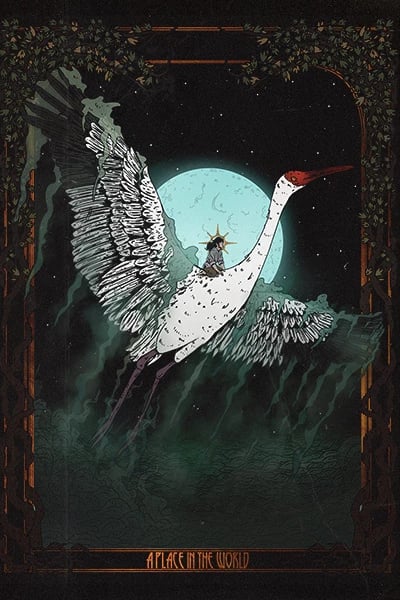
The world is a slaughterhouse, and you are the meat. Welcome to the Cultivation World of Sky Pride. We open on a massacre. Not a battle, but an execution. The Hong clan, once a noble house, is being systematically exterminated. The reason? They have enemies. The method? A pack of "Lay Brothers" – mortal mercenaries sanctioned by a higher power – are hacking their way through the compound with steel sabers and flying swords. The air is thick with the screams of dying men and the wet, rhythmic chop of blades cleaving flesh. In the heart of this chaos, a six-year-old boy lies in his bed, wracked by disease. His body is a catalogue of congenital failures: he is sterile, his meridians are utterly absent, his bones are brittle, and his flesh is ravaged by burns. His mother, a woman with eyes of glassy despair, has decided that he will not be taken alive. She feeds him a grey pill – a poison – to give him a "peaceful" death. Then she is cut down by a spray of golden darts. The house is set ablaze. The boy, presumed dead, is thrown into the city’s dump. This is the inciting anti-event. There is no chosen one, no secret bloodline awakening. There is only a broken piece of trash, a child whose body is a living curse, left to die in the company of rotting vegetables and marauding rats. Sky Pride is not a typical Xianxia. It is a grimdark survival epic wrapped in the skin of a cultivation novel. The world is a harsh, unforgiving place ruled by a simple law: "Rip the weeds out by the roots, so they don’t grow back." This is a world where the powerful eliminate not just their enemies, but their children, their servants, and anyone who might one day harbor a grudge. It is a world of brutal, systemic violence where "orthodox" and "heretic" are just different brands of the same ruthless pragmatism. The setting is a classic cultivation world: a vast land ruled by sects, with the Ancient Crane Mountain Sect standing as the bastion of orthodox power. There are Mortals, Earthly Person Cultivators who live for centuries, and Heavenly Person Cultivators who are essentially gods. Below them are the wastes, the Redstone Wastes, a demon-infested desert where the heretics are forced to dwell. The story's genius lies in its perspective. We don't see this world from the peak of power; we see it from the very bottom, looking up. The "Sky" of the title is not a promise of easy flight, but a taunt – a reminder of how far the protagonist has to climb. The Heavens themselves are the ultimate antagonist, a "Mad God" who has ordained a universe of suffering. Tian Zihao's journey is not just about becoming strong; it's about spitting in the face of God. The narrative's true innovation is its subversion of the standard "cheat" or "system." There is no glowing interface, no skill tree, no gamer's log. The cheat is a sentient artifact – a bone ring – housing a bitter, ancient spirit named Grandpa Jun. Grandpa Jun is not a benevolent master who can wave his hand and fix everything. He is a venture capitalist of the soul, a "high-leverage investor" who can only spend his precious, finite energy to create opportunities for Tian. He is the ultimate "show, don't tell" mentor. He provides the blueprint, but Tian must build the house with his own hands, and the building materials are his own suffering. This is the most compelling part of the worldbuilding: the protagonist is not just a victim of his environment; he is an active agent in his own destruction and reconstruction. He doesn't just take a magic pill; he uses his knowledge of yin-yang and the five elements to dissolve himself in a pit of snake venom and lotus root, forcing his own body to be reforged from the cellular level. The pain is excruciating, but it is the necessary price for growth. This sets the tone for the entire novel: strength is not given; it is ripped, bleeding, from the universe's teeth.
This is the point where I say that I’ve seen worse. That always cheers people up, knowing some other bastard suffered more. But I haven't. Condemned by the merciless Heavens, oppressed by cruel Fate, that’s normal, that’s fine. Fiancé left you, your clan got exterminated, someone stole your precious whatsit – all fine. Normal, even. This is sick. This is why I got such a high exchange rate.
Story Chronicles
NODE 01THE ASHES AND THE RING – "The Boy Who Refused to Die in the Trash"
Feral SurvivalAlchemical Genius
Archivist Insights
The saga begins not with a hero's birth, but with a funeral. Six-year-old Tian Zihao is the heir to the Hong clan, but he is a grotesque failure of a child – sickly, malformed, and sterile. His mother, knowing the clan has been exterminated, poisons him with a lead pill, intending to give him a merciful death. As the house burns around them, he is left in the trash. He is thrown into the city dump, a gargantuan landfill of rotting food, broken pottery, and human filth. He wakes up with no memories, missing most of his fingers, and suffering from a litany of diseases: lead poisoning, cancer, the early stages of an opium addiction, a shattered brain, and full-body burns. His first act is to scream. His second is to drink stagnant water from a broken pot, fighting the urge to vomit. This is not a training montage; it is a chronicle of suffering. He learns to survive in the trash: he eats grubs, fights rats, and hides from the massive walking dumpsters that periodically empty their cargo. His only companion is a soft, metallic pill he licks to numb the pain – his mother's poison, now his only comfort. Then, the ring. A bone ring, worn thin, fuses with his finger. Grandpa Jun awakens. The old spirit is horrified by Tian's condition but sees a "high-leverage investment." He gives Tian two tools: The "Sunnyvale Calisthenics" – a mundane stretching routine to improve his digestion – and the "Gourmet" method, a way to turn toxins into medicine by breathing in a certain pattern. This is the first test: Tian must learn to eat garbage and turn it into fuel. He practices, slowly building strength. He learns to hunt mice and snare birds. Four years pass in the dump, and Tian grows into a wiry, resilient predator. The first major event is the slaying of a rabid wolf. Tian, cornered, chokes the beast to death with his thin arms. He feels Grandpa Jun's warm, approving hug for the first time. It's the first moment of love he can remember. Grandpa gives him a name: Tian Zihao, meaning "Heaven's Pride." It's a cruel joke for a boy who lives in hell, but Tian embraces it. Next, the "Tian Soup." Grandpa Jun, now running low on energy, declares that the dump cannot fix Tian's missing meridians or his chronic diseases. They must leave. He guides Tian to a pond of Dustless Lotuses, a body-refining treasure, but it is infested with the Three Venom Seven Death Adders, a species so venomous that even a scratch is lethal. Grandpa Jun gives Tian a simple instruction: "The problem is for you to solve." This is the first true test of Tian's intellect. He spends days observing the snakes. He discovers that when a lotus is uprooted, the snakes below go mad, attacking each other. He uses his rope (made from bark) to hook lotuses from the bank, creating chaos. The adders, driven by the lotus's essence, tear each other apart. Tian then harvests the lotuses and the dead snakes. His plan is simple, brutal, and effective. The body reforging is the climax of this arc. Tian digs a pit, fills it with mud and water, and dumps in the crushed snake flesh, lotus root, and gallbladders. He adds the poison from the snake heads. He strips naked, lies in this slurry, and then, with a trembling will, forces himself to endure the venom. His body breaks down – his nerves, his organs, his bones all melt. He is actively dissolving. But in that state of extreme Yin, he cycles the Advent of Spring, a cultivation art Grandpa Jun transmits to him at the last moment. He is simultaneously dying and being reborn. His body is rebuilt from the ground up, incorporating the python essence and lotus spirit. He gains a Dustless Physique, Natal Qi, and fully formed meridians. He is no longer a broken human; he is a foundation for a god.
◆ Conclusion
From the ruins of a massacre, a nameless, broken boy clawed his way out of the garbage. He learned to turn poison into medicine, to outthink a nest of deadly snakes, and to reforge his own body in a crucible of agony and will. He walked away from the dump not as a victim, but as a predator on the hunt for a destiny that was stolen from him.
NODE 02THE MONK IN THE TEMPLE – "Learning to Be Human is the Hardest Cultivation"
Feral to MonasticRivalryFirst Blood
Archivist Insights
Tian survives the fall. He is saved by a Stormborne Pine Truffle, which cures his myopia and color blindness. He wanders into the mortal world, a feral child, and is taken in by the West Town Temple, a branch of the Ancient Crane Mountain Sect. Here, the conflict shifts from physical survival to social and emotional survival. Tian must learn to be a person. The first face-slap is his entrance test. Hundreds of mortal children line up to strike the Dragon Calling Bell. If it rings, they have a "fate" with cultivation. No one has rung it in ten years. Tian is shunned by the other children for his ugliness and mutilated hands. But when he takes the striker and swings, the bell roars with a deep, resonant tone. Brother Fu, the two-hundred-year-old leader of the Temple, immediately singles him out. Tian is in. His new life is a comedy of errors. Given the Advent of Spring cultivation manual, he reads the poetic metaphors about being a tree that connects heaven and earth and declares, "I think the person who wrote this was kicked in the head. There is no tree growing in me." He asks Brother Fu if the "monarch without" means he should burn down villages and keep a harem. He doesn't know what a wife is, what "filial piety" means, or why anyone would want a friend. He sleeps under his bed, terrified of the comfort of a mattress. But the Temple is patient. Brother Fu, a "Mad Dog" who once slaughtered forty bandits single-handedly, has found peace. He methodically teaches Tian etiquette, history, and, most importantly, morality. He gives Tian the "Advent of Spring" not just as a cultivation art, but as a philosophy of constant, steady growth. The next major test is the sparring session with the Convent. Tian is pitted against Hong Liren, the arrogant, spear-wielding granddaughter of a powerful Inner Court cultivator. Hong Liren looks down on him, calling him a "mutilated monkey" and a "toad hungering for swan meat." Tian doesn't understand the insult, but he understands aggression. The fight is brutal and fast. Hong Liren is taller and stronger, but Tian is a creature of the junkyard. He uses his rope dart, wrapping it around her spear, and then, with a ruthlessness that shocks everyone, he jumps on her back and locks his legs around her waist, a garrote around her neck. He doesn't just beat her; he nearly kills her. It is a statement: "I am worthy. The question is, are you worthy to fight me?" Brother Fu and Sister Bai separate them. Tian is scolded for his ferocity, but the lesson is deeper. Tian learns that he must "turn enmity into friendship," not because it's nice, but because Hong Liren's grandmother could have him killed. This is the introduction of realpolitik. The cultivation world is not just about personal strength; it's about connections and survival. The moral education arc reaches its peak in the cave of Bloody Cleaver Wang. Tian is sent on his first solo mission to kill a heretic. He finds Wang in a cave, suspended from a hook, his blood slowly draining into grooves on the floor. There are caged peasants. Wang is cultivating by drinking their life force. Tian's first instinct is to attack, but he pauses. He identifies a hidden hornet's nest above the door, controlled by a bone whistle. Instead of charging in, he throws a rock, shattering the whistle and Wang's teeth. He engages Wang in a brutal melee, but the fight is not about who is stronger; it's about who is smarter. Tian uses his palm strike to rupture Wang's organs, ending the fight. But the true test comes after. Brother Su, his supervising senior, reveals the mission was a test of morality. Tian saved the peasants, even though it wasn't part of the mission and risked his own life. Su explains the difference between the Orthodox and the Heretics: the Orthodox follow laws and moral education. They have rules to govern a group, and those rules are the greatest protection for the weak. Tian passed. He is not just a killer; he is a righteous killer.
◆ Conclusion
The wild boy entered a monastery and was forged into a man. He learned to laugh, to fear, to lose, and to win. He learned that the world's deadliest weapons are not swords, but laws and etiquette. He took his first human life and, in doing so, discovered the difference between murder and justice.
NODE 03THE WASTELAND CRUCIBLE – "Blood, Sand, and the Sound of Dying Gods"
Political BetrayalDemonized BeastsBody Reforging II
Archivist Insights
The Southern Border is hell. Tian arrives at Forward Base Redknife, a fortress of stone and spirit formations, surrounded by a desert of black sand where the wind is laced with stone particles that shred lungs. The air is toxic, the sun is brutal, and the creatures are nightmare-born. He is assigned to a patrol with other young disciples. Their first day is a massacre. Scorpions the size of horses burst from the sand. Demonized birds dive from the sky. The senior cultivators are killed, and it's up to Tian and Hong to survive. This is where Tian's ruthlessness shines. He uses his rope dart to blind a demonized frog, then uses its own tongue as a pulley to pin it to a tree. He slaps its head, killing it with the Thunderous Palm. He is a tactical genius of the battlefield. But the war is not just physical; it's political. Hong Liren's grandmother, a powerful True Disciple of the Inner Court, arrives at the base. She takes a moment to "favor" Tian. It's a curse. The camp's underlings, desperate to curry favor with her, immediately begin scheming. Tian is assigned a "suicide" courier mission, a job that involves running alone across the Wasteland, a journey that has killed a dozen seasoned cultivators. He is a sacrifice, a lamb sent to slaughter to please the powerful. The courier mission is a gauntlet. Tian runs through the desert, fighting off scorpions, centipedes, and a demonized hawk. He survives by being smaller, faster, and smarter than his enemies. He develops a running battle rhythm, switching between his cultivation art, his light body technique, and his sensory art to survive. Then, the climax: the Demonized Hawk. A colossal bird of the Heavenly Person realm descends and swallows Tian whole. He is trapped in its stomach, a lake of freezing acid and yin flames, surrounded by the dissolving corpses of giant centipedes. His protective gear dissolves. His body begins to melt. He is on the brink of death. In this moment, he remembers Grandpa Jun's teachings. The stomach is a place of extreme Yin. He cultivates the Advent of Spring, drawing in the yin qi and transforming it into yang growth. He uses the acid to "dissolve" his own body and then rebuild it, stronger and purer. It's a second body reforging, and it is even more agonizing than the first. His fingers begin to grow back. His meridians are reinforced with the hawk's immortal qi. He tears his way out of the bird's belly, naked and covered in gore. He stumbles out into the middle of a battle, kills a few heretics, and delivers his package. He is a horror story and a hero at the same time.
◆ Conclusion
The war was a meat grinder, but Tian Zihao was not ground down. He was forged. He survived political assassination, demonic beasts, and the belly of a god. He emerged from the Wasteland stronger, wiser, and wearing the skin of a monster. He is no longer a rookie; he is a veteran, a survivor, and a legend in the making.
NODE 04THE ROAD TO THE SKY – "A Father's Tea and a Mother's Curse"
Moral AscendancyUnlocking The SkyThe Sound of Spring
Archivist Insights
The war grinds on. Tian is assigned to the hospital, working as an orderly, processing the dead and the living. The heretics launch a massive attack on Depot Number Four. Corpses are weaponized, zombies are deployed, and the necromancer's plague spreads. Tian is in the thick of it, dragging his brothers and sisters to the surgeons, burning corrupted limbs. He nearly breaks under the weight of the suffering. But in the darkness, he finds his father. Brother Fu appears, a phantom of the battlefield. He is not fighting with rage; he is fighting with effortless grace. He moves through the heretics like water through rocks, letting them impale themselves on his blades. Tian watches in awe as Brother Fu demonstrates the "way of the sage," acting in accordance with nature. It is a beautiful, terrifying dance. After the battle, Brother Fu finds Tian, who is covered in blood and poison. He sits down and brews tea. It's the same tea ceremony he taught Tian. He offers Tian a cup, and Tian, for the first time, calls Brother Fu his father. This is the emotional apex of the narrative. Tian, the feral child, the orphan, the piece of trash, finally has a family. He has his grandfather, his father, and his brothers and sisters. He no longer fights just for survival; he fights for them. The climax of the volume is Tian's final realization. He is not just a monster of the battlefield; he is a cultivator. He understands the Advent of Spring on a deeper level. He is the tree that connects earth and sky, constantly growing, constantly reaching. He looks up at the spiritual mountain, the Ancient Crane Mountain, and he knows his path. It is not about fighting the heretics; it is about transcending them. He will climb the mountain. He will become a True Disciple. He will soar.
◆ Conclusion
The boy who was thrown away found a family in a war. He learned that the true strength of the Orthodox path is not in its swords, but in its laws, its morality, and its love. He stood in the blood of his brothers and drank tea with his father, and in that moment, he understood his destiny: to climb the sky and spit in the face of the Mad God.
Character Lore Pantheon
Tian Zihao
FeralRuthlessLoyalTactical Genius
The ultimate underdog. His trajectory is from zero to hero, but it is earned through blood, pain, and strategic brilliance. To become powerful enough to protect his new family. To "soar," as Grandpa Jun promised. To spit in the face of the God who made him suffer.
Grandpa Jun
The CheatSarcasticProtectiveCynical
The ultimate mentor. He provides knowledge and opportunity, but he forces Tian to do the work. He is the voice of the "system" and the emotional anchor of the story. To break his own imprisonment by helping Tian ascend. To destroy the "Mad God" who ordained a universe of suffering.
Brother Fu
Mad DogPatientWise Disciplined
He is the embodiment of the Orthodox path's "Moral Education." He is Tian's adoptive father. He teaches Tian how to be human. To build a strong, loyal next generation for the Sect. To atone for his violent past by raising a peaceful, ethical future.
Fair Use & IP Notice
MythFan is a community-driven, fan-contributed wiki & archive operating under Fair Use guidelines. MythFan does not host, store, or distribute any novel downloads or copyrighted media assets. All content is contributed and maintained by community members. If you believe any content infringes upon your intellectual property rights, please send a notice to [email protected] — we will review and remove infringing material within 3–7 business days upon verification.
💬
Sanctuary Discussion
Sky Pride · Forum
🔑 Sign in to participate in discussions
Sign InProject Sanctuary · Native Discussion System