📊 Editorial Consensus89%
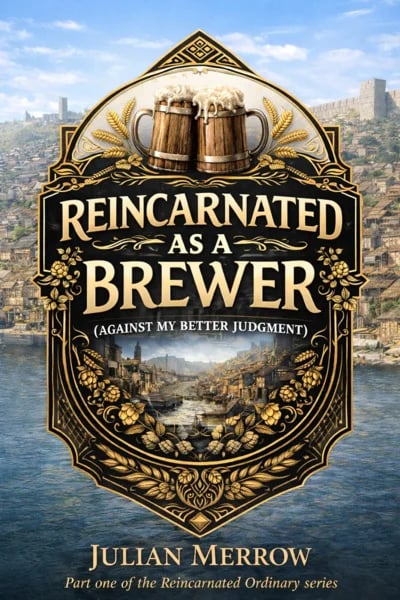
Reincarnated as a Brewer
by Julian Merrow
● OngoingRoyalroad
#Portal Fantasy / Isekai#Progression#Kingdom Building#Comedy#Adventure#Fantasy
Archivist Notes
In a realm where magic bleeds through stone and guilds rule with quiet tyranny, a weary modern soul awakens without breath, without bone, suspended in a liminal space stitched together by mismatched architectural fragments and a childlike deity who mistakes cosmic creation for a casual hiring process. This is not the typical hero journey forged in blood and destiny; it is a meticulous recalibration of purpose, where a former computer systems engineer trades corporate burnout for the alchemy of fermentation. The world operates on rigid class divisions, archaic guild monopolies, and a magical economy that treats mana like currency and yeast like a divine secret. When the goddess offers a single boon to compensate for her careless selection, she expects grandeur, but receives something profoundly domestic: reliable yeast cultures. This seemingly mundane gift becomes the cornerstone of a hybrid narrative that fuses urban planning, logistical warfare, and artisanal craftsmanship into a seamless tapestry of industrial fantasy. The protagonist does not seek glory or conquest; he seeks control, order, and the quiet satisfaction of turning grain, water, and time into something that sustains and delights. His origin is not marked by tragedy, but by exhaustion, making his rebirth a deliberate escape from a life spent chasing metrics that never mattered, now channeled into the precise science of brewing.
The transition from spiritual void to physical reality is jarring yet methodical. Alric wakes to cold earth, unfamiliar clothes, and a body free of chronic pain, immediately recognizing that survival here requires more than brute strength. It demands supply chains, quality control, and an understanding of local economics that rivals any boardroom strategy. His item box, a spatial inventory gifted alongside his divine blessing, functions less as a magical cheat and more as a logistical marvel, allowing him to bypass traditional bottlenecks while introducing modern concepts like standardization, batch tracking, and controlled fermentation. The city of Avengard becomes his laboratory and marketplace, a sprawling metropolis divided by wealth, craft, and guild rivalries, where sour ale is tradition and clean beer is revolution. As he navigates bureaucratic labyrinths, haggles with merchants, and negotiates with dwarf smiths, the narrative sheds its fantasy veneer to reveal a deeply grounded tale of enterprise. Magic exists, but it is constrained by rules, stamina, and practical application. The true power lies not in spellcasting, but in consistency, patience, and the relentless pursuit of improvement. Every cask sealed is a victory against chaos; every delivery completed is a strike against monopoly.
He had taken that away from everyone else.
Reincarnated as a Brewer
Story Chronicles
NODE 01The Divine Boon and First Brew
logisticsguildwarfarefermentationscience
Archivist Insights
Awakening to a reconstructed body and a spatial inventory, Alric quickly realizes that survival in Avengard demands more than mythical blessings; it requires systematic execution and economic navigation. He begins by testing the limits of his item box, discovering that it functions as both storage and transport but refuses to hold loose items without mental focus, a constraint that forces him to treat logistics as a disciplined craft rather than a magical shortcut. His initial attempts at brewing fail miserably due to contaminated well water, aggressive local herbs, and an ignorance of temperature control, proving that divine gifts cannot bypass fundamental chemistry. Each ruined batch becomes a lesson, pushing him toward water filtration using river sand and charcoal, precision boiling via enchanted heating stones, and the careful introduction of bottom fermenting lager yeast. He secures a warehouse, negotiates with a grumpy dwarf smith for copper pipes and liquid seals, and hires impoverished locals Mara and Hal, transforming them from desperate laborers into skilled operators through strict hygiene protocols and repetitive training. The turning point arrives when he finally produces a clean, non-sour ale that defies local tradition, catching the attention of the Adventurers Guild and triggering immediate hostility from entrenched tavern and innkeeper factions. Word spreads through whispers and spilled tankards, drawing guild enforcers who attempt to sabotage his operations through intimidation and supply blockades. Rather than retreat, Alric doubles down on quality and transparency, openly rejecting guild monopolies while offering fair contracts to independent brewers and dock workers. His refusal to compromise on standards transforms a struggling startup into a movement, forcing established businesses to confront their own declining products. As winter approaches, the city appetite for consistent, high grade alcohol creates unprecedented demand, stretching his limited casks and mana charged heating stones to their absolute limits. He pushes his staff to work through snowstorms, personally handles deliveries until collapse, and establishes a supply chain that bypasses traditional merchant routes entirely. The guilds respond with arson, attempting to burn his warehouse to the ground during a blizzard, but Alric latent magical ability triggers instinctively, draining his reserves to rupture a nearby well and flood the flames before he falls unconscious. The attack backfires spectacularly, painting the guilds as desperate criminals in the eyes of the public while elevating Alric brewery to legendary status. With the Adventurers Guild pledging protection and independent taverns defecting in droves, the conflict shifts from economic rivalry to outright war. The final hours of winter leave Alric exhausted but victorious, his operation scaling rapidly despite severe magical bottlenecks that threaten to stall growth permanently. As spring approaches and new threats emerge from noble quarters and temple factions, he stands on the brink of an even larger battle, knowing that sustained success will require not just better beer, but complete structural dominance over the city distribution networks.
◆ Conclusion
Establishes operational foundation, triggers guild hostility, and proves quality over tradition drives market disruption.
NODE 02The Festival Offensive and Market Domination
marketmonopolythermalmanagementinstitutionalshift
Archivist Insights
With winter broken and guild morale shattered, Alric pivots from defensive survival to aggressive expansion by launching a week long festival hosted by the Adventurers Guild, deliberately pricing premium beer below cost to flood the market and starve rival breweries. The strategy works instantly, drawing massive crowds, generating violent fighting pit enthusiasm, and stripping independent taverns of their loyalty to traditional suppliers. Guild representatives scramble to replicate his methods, but lack the standardized processes, consistent yeast cultures, and disciplined workflow that turn chaotic experimentation into reliable production. As sales peak, Alric recognizes that scaling beyond ninety casks daily requires solving mana constraints, prompting him to recruit Battery, a starving mage whose sole function becomes charging heating stones while balancing translation duties and academic training. The influx of capital allows rapid infrastructure upgrades, including a reinforced roof frame, oxen driven barrel lifts, and a third boiler designed by Stromni, though thermal management becomes a critical vulnerability as summer heat accelerates fermentation uncontrollably. Faced with spoiled batches and thin berry wines, Alric implements strict cooling protocols, external shelving, and batch blending techniques that prioritize consistency over seasonal novelty, ultimately abandoning cider production to avoid monopolizing harvest markets and alienating fellow producers. Instead, he shifts focus to grape wine, securing bulk shipments through merchant alliances and preparing long term aging cellars that promise multi year revenue stability. Meanwhile, political pressure intensifies as temple factions begin blessing rival casks, innkeepers attempt mediation traps, and nobles across the river demand unfair discounts that would bankrupt his margins. Alric refuses all compromises, relying on armored escorts, strategic supply routing, and transparent communication with independent operators to maintain market share without sacrificing autonomy. His decision to host the festival publicly forces guild leaders into reactive posturing, exposing their inability to match his operational efficiency while rallying public sympathy toward fair trade practices. As the festival concludes, the city experiences a measurable shift in drinking culture, with once struggling establishments thriving on improved products and reliable deliveries. Yet beneath the surface, deeper challenges emerge regarding mana exhaustion, equipment maintenance, and the psychological toll of managing a growing enterprise without proper delegation. Alric realizes that sustaining momentum requires transitioning from hands on operator to strategic overseer, a transformation that threatens to distance him from the craft he initially cherished. With winter supplies depleted, spring orders overwhelming, and guild remnants plotting underground retaliation, the balance tips toward unprecedented growth, but also introduces the risk of systemic collapse if magical bottlenecks remain unresolved. The city watches as his brewery evolves from a local curiosity into an institutional force, knowing that the next phase will demand not just better products, but complete economic restructuring.
◆ Conclusion
Demonstrates how strategic pricing, operational discipline, and ethical expansion dismantle entrenched guild monopolies.
NODE 03The Mage Bottleneck and Artisanal Crisis
manaconstraintsartisanalcrisisleadershipevolution
Archivist Insights
The relentless pace of production exposes a critical vulnerability that no amount of financial investment can immediately resolve: the complete dependence on finite magical resources to sustain large scale brewing operations. Alric discovers that his item box cannot store infinite mana charges, and manual stone recharging drains his personal reserves faster than recovery rates allow, creating a hard cap on daily output regardless of equipment capacity or labor availability. To circumvent this bottleneck, he formalizes Battery role as a dedicated mana conduit, trading academic tuition and translation work for reliable charging sessions, while simultaneously exploring alternative solutions like copper conductors and structured charging cases designed to safely distribute energy without damaging crystals. The physical toll of repeated mana extraction leaves Alric physically depleted, forcing him to acknowledge that sustainable growth requires either finding additional mages or fundamentally redesigning the distillation and fermentation workflows to reduce thermal dependency. Seeking respite from administrative burdens and managerial isolation, he reconnects with Stromni through an experimental still building session that mirrors his college days, embracing failure, improvisation, and shared laughter instead of corporate perfectionism. Their makeshift apparatus explodes in a cascade of sour mash and broken leather gaskets, producing zero usable product but restoring a sense of creative freedom that bureaucracy had systematically erased. Through this cathartic failure, Alric confronts the uncomfortable truth that his operational success has inadvertently destroyed local brewing culture, replacing artisanal experimentation with industrial consistency that leaves no room for community participation or skill development. He recognizes that his reliance on standardized processes, strict hygiene mandates, and profit driven scaling has transformed a passion project into a monopolistic engine that prioritizes efficiency over craftsmanship, effectively eliminating the joy of trial and error that originally defined his relationship with fermentation. The realization strikes during quiet riverside moments, watching patrons drink his beer without understanding its origins, while guild leaders scheme in shadowed offices and nobles demand subservient contracts. Alric understands that maintaining market dominance requires accepting his role as a logistical architect rather than a hands on brewer, delegating production oversight to trained supervisors, and focusing exclusively on supply chain optimization, legal compliance, and long term strategic positioning. However, this necessary evolution threatens to sever his direct connection to the craft, risking emotional detachment and operational blind spots as decisions become increasingly abstract and distant from the floor. With berry harvests pending, grape imports arranged, and independent taverns demanding expanded allocations, the pressure mounts to scale further while navigating political minefields, temple interference, and potential aristocratic intervention. The delicate equilibrium between commercial ambition and artistic integrity fractures under the weight of expectation, forcing Alric to choose between becoming a ruthless industrialist or preserving the collaborative spirit that initially fueled his rise. As summer peaks and thermal stress threatens another wave of spoilage, the brewery stands at a crossroads where survival depends not on better ingredients, but on whether leadership can adapt without sacrificing the soul of the enterprise.
◆ Conclusion
Exposes magical limitations, triggers philosophical reckoning over craft destruction, and forces strategic delegation.
NODE 04The Structural Shift and Forward Momentum
institutionalarchitecturedistillationpivotlegacyquestion
Archivist Insights
The conclusion of the first volume marks a decisive transition from reactive survival to proactive empire building, as Alric fully embraces the reality that sustained dominance requires institutional architecture rather than individual heroics. Having neutralized guild opposition through transparent pricing, reliable deliveries, and public festival engagement, he now faces the complex challenge of scaling beyond physical and magical constraints while maintaining product integrity and staff morale. The successful integration of Battery as a mana conduit, combined with Stromni engineered upgrades and Vale rigorous ledger systems, establishes a functional hierarchy that gradually removes Alric from daily labor, redirecting his focus toward supplier negotiations, legal protections, and long term market positioning. Summer brings new variables including uncontrolled fermentation temperatures, inconsistent berry yields, and temple sanctioned competition that attempt to undermine his credibility through spiritual branding and aristocratic pressure. Rather than engaging in direct confrontation, Alric strategically abandons cider production to prevent market saturation, pivots toward grape wine for extended aging potential, and reinforces his supply chain through merchant partnerships that guarantee consistent raw material access. His decision to hire armored escorts, implement strict delivery protocols, and refuse unfair discount demands demonstrates a mature understanding of economic leverage, proving that commercial independence matters more than short term convenience. Meanwhile, the psychological shift from passionate brewer to calculated manager becomes increasingly apparent as administrative duties consume waking hours, relationships grow transactional, and the tactile joy of fermentation fades behind spreadsheets and scheduling conflicts. The experimental still session with Stromni serves as a poignant reminder of what was sacrificed in the pursuit of reliability, highlighting the tension between artisanal authenticity and industrial scalability that defines his ongoing struggle. As independent taverns flourish, guild remnants retreat into underground scheming, and noble factions eye territorial expansion, the city enters a new era where Alric brewery operates as a foundational institution rather than a disruptive novelty. The narrative closes on the threshold of Volume Two, signaling a thematic pivot toward distillation, advanced fermentation techniques, and broader geopolitical maneuvering that will test his leadership, moral boundaries, and adaptive capacity. With winter supplies exhausted, spring orders overwhelming, and magical bottlenecks still unresolved, the brewery stands ready to evolve into a multi product enterprise capable of reshaping regional consumption patterns. Yet beneath the polished ledgers and reinforced infrastructure lies an unresolved question about whether success measured in coin and casks can ever replace the irreducible value of creative freedom. As steam rises from newly installed boilers and carters prepare for dawn departures, the city holds its breath, aware that the next chapter will demand not just better machinery, but a clearer vision of what kind of legacy Alric intends to build before the craft disappears entirely.
◆ Conclusion
Transitions from operator to architect, setting stage for distillation expansion and moral evaluation of scaled success.
Character Lore Pantheon
Alric
analyticalpragmaticethically conflicted
Alric anchors the narrative as a burned out modern professional thrust into a fantasy world, where his greatest advantage lies not in combat prowess but in systems thinking, logistical foresight, and relentless quality control. Armed with a spatial inventory and divine yeast cultivation, he transforms a failing startup into a city wide institution by mastering water filtration, thermal regulation, and standardized fermentation protocols. His core stakes revolve around overcoming magical bottlenecks, resisting guild monopolies, and preserving artisanal integrity amid industrial scaling. Major plot turns include surviving a guild backed arson attack, leveraging an Adventurers Guild festival to dominate market share, recruiting a mana conduit mage, and confronting the psychological toll of abandoning hands on craftsmanship for managerial oversight. His trump card remains operational consistency, which systematically dismantles traditional brewing practices while forcing economic realignment across taverns, inns, and independent distributors.
Stromni
meticulousloyaltechnically brilliant
Stromni serves as Alric indispensable mechanical partner, translating abstract brewing requirements into functional copper boilers, liquid seals, lifting frames, and eventually experimental distillation apparatus. His core stakes involve maintaining dwarven craftsmanship standards while adapting to human scale industrial demands that prioritize efficiency over tradition. Major plot turns include engineering the warehouse roof rigging, designing the third boiler station, cofailing a makeshift still that restores Alric creative spark, and quietly mentoring junior operators through practical demonstrations. His trump card lies in metallurgical problem solving and structural reinforcement, enabling mass production without compromising safety or durability. Stromni unwavering pragmatism and dry humor anchor the narrative technical realism, ensuring that magical elements remain grounded in tangible engineering constraints.
Seren
organizedperceptiveadministratively sharp
Seren emerges as the administrative backbone of the brewery, transforming chaotic record keeping into systematic ledger management, delivery routing, and staff scheduling. Her core stakes center on professional advancement, financial transparency, and maintaining operational discipline amid rapid expansion and thermal crises. Major plot turns include implementing receipt stamping protocols, negotiating supplier terms, enforcing cooling shelf placements, and gradually assuming clerical authority that relieves Alric of daily paperwork burdens. Her trump card is structural organization, converting raw data into actionable insights that prevent bottlenecks, optimize cask allocation, and track independent tavern performance. Seren calm precision and strategic foresight elevate the enterprise from improvised startup to institutional operation, ensuring that growth remains sustainable rather than chaotic.
Fair Use & IP Notice
MythFan is a community-driven, fan-contributed wiki & archive operating under Fair Use guidelines. MythFan does not host, store, or distribute any novel downloads or copyrighted media assets. All content is contributed and maintained by community members. If you believe any content infringes upon your intellectual property rights, please send a notice to [email protected] — we will review and remove infringing material within 3–7 business days upon verification.
💬
Sanctuary Discussion
Reincarnated as a Brewer · Forum
🔑 Sign in to participate in discussions
Sign InProject Sanctuary · Native Discussion System