📊 Editorial Consensus89%
Rebirth in Japan: The Heiress Who Conquered the World
by marvel_en
● OngoingWebnovel
#REINCARNATION#SLICEOFLIFE#KINGDOMBUILDING#HISTORICAL#REBIRTH#RICHFAMILY
Archivist Notes
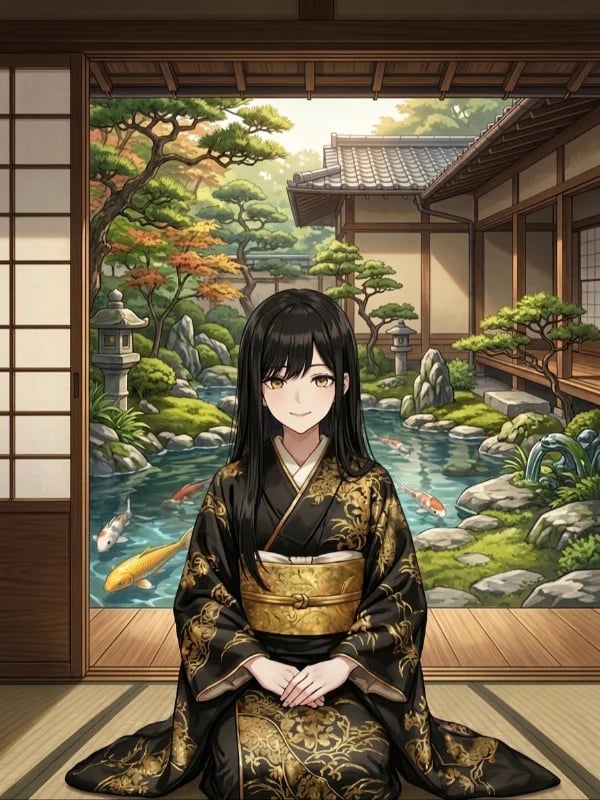
The funeral of Saionji Yuriko becomes a stage for scavengers. Her twelve year old daughter, Satsuki, stands before the mirror in a black mourning dress, and behind her innocent features hides a dead woman from Manhattan. Once she was a Goldman Sachs analyst discarded to cover a billion dollar scandal. Now she is a child of the old kazoku aristocracy, a biological container with a perfect memory of the 1985 Japanese economic massacre and every greedy decade that will follow. Her mother's coffin is barely cold, yet hungry relatives are circling her grieving father with a five billion yen loan for factory expansion. Satsuki knows this golden opportunity is arsenic wrapped in silk, because in five months the Plaza Accord will destroy export dependent Japan. She chooses this funeral as the site of her first takeover. With tear-filled eyes and a trembling voice, she babbles about the angry Americans and the flood that will drown Detroit, and the adults who were about to sign their lives away freeze in shame.
The performance is flawless. Her father cancels the loan, and her scheming uncle Kenjirou is humiliated in front of the bank executives. Round one ends in absolute victory. Satsuki retreats to the corridor, humming a light tune, her cold eyes already mapping a decade of conquest. The cheat is not a magic system but information asymmetry, the terrifying knowledge of a financial corpse inside a doll's body. She will ride the rising bubble, short the dollar, buy the crash, and build a zaibatsu from the bones of a dying era while the world sees only a grieving aristocratic daughter. Her true face is the smile of a black lily blooming on a grave, beautiful and laced with poison. The stage is set for the most dangerous game in Tokyo.
In this life, I didn't have to lift a finger—I woke up already at the finish line.
Rebirth in Japan: The Heiress Who Conquered the World
Story Chronicles
NODE 01The Dam Breaks at the Plaza
Plaza Accordcurrency speculationfamily betrayal
Archivist Insights
Shuichi Saionji, a man of lineage but shrinking reserves, listens to the sirens of profit and nearly signs away his ancestral lands. Satsuki hides behind a marble pillar, and in that hidden space the child becomes a general. Her father is a desperate but decent man, so she wraps her strategy in compassion. She becomes the grieving daughter serving hot milk to a sleepless patriarch, and in his study she lays out the dam theory with a child's picture book vocabulary. The currency markets are a man-made dam, she says, and the dollar is holding back an ocean of debt. When the dam opens, the villages downstream will drown, so the family must move its money to high ground before the flood. Shuichi the lifelong conservative is transformed into Shuichi the speculator. The five billion yen loan for factory expansion is cancelled and replaced by an offshore credit line shorting the dollar at maximum leverage. Meanwhile her uncle Kenjirou, drunk on vanity, demands the factory as his own independent kingdom, and Satsuki lets him take the throne knowing the collapse will make him the sacrificial sheep. The banker who once treated the Saionji name like a beggar's card now receives a letter requesting offshore accounts, and the signature drips with aristocratic calm. The Plaza Accord lands like a divine verdict. The yen explodes upward, the short position prints billions, and Kenjirou's crown turns to a noose of 300 percent penalty clauses. But the market refuses to cooperate forever, and in September a typhoon and a dollar rally drag the family to the edge of forced liquidation. In a midnight that smells of thunderstorms, Shuichi's hand shakes above the phone, and Satsuki tells him that winners do not surface before the whale is dead. He does not close the position. He increases it. The rain drums against the glass, and somewhere in Zurich a margin clerk is laughing at the doomed Japanese nobleman, unaware that the girl asleep upstairs has already booked his funeral.
◆ Conclusion
The Plaza Accord turns Satsuki's future knowledge into capital while erasing a treacherous uncle.
NODE 02The Construction of the Bubble Empire
real estate empireThe ClubSeibu confrontation
Archivist Insights
The victory at the Plaza Accord gives the Saionji family its first mountain of cash, and Satsuki immediately transforms it into an empire of concrete and prestige. Twelve billion yen of freshly printed wealth is converted into a thousand scraps of seemingly worthless land that multiply fourfold in half a year. The old red brick eyesore in Ginza becomes the Crystal Palace, a sapphire temple of luxury brands that turns the strong yen into a magnet for European fashion houses, and the annual rent alone becomes a fortune. In Akasaka she commissions a mad architect to paint a building pink, filling it with manicure salons and champagne fountains, and the women of Tokyo line up to spend their salaries on the dream of being queens for an afternoon. The revolutionary karaoke boxes, built from shipping containers on garbage plots beside railway tracks, start printing cash even while she staffs them with professional voice coaches. In Azabu Juban the cursed mansion of Count Kyogoku is reborn as The Club, a fortress of silence where the price of entry is one hundred million yen and a recommendation from an existing lord. The old nobility, the Ministry of Finance, the zaibatsu and the Wall Street brokers begin to treat it as the true control room of Tokyo. When the Seibu Group launches the first direct challenge, sending a bulldozer and a middle manager to break the two meter wide land corridor that Satsuki had bought as a strategic fishbone, she does not shout. She files an injunction, mobilizes the police through political allies, and watches the giant's own deputy manager get crushed into a snow removal exile. The Emperor of Seibu, Yoshiaki Tsutsumi, swallows his pride and sends a tower of white orchids to the opening of The Club, a public bow that seals the Saionji family's rise from fallen nobility to kingmaker. The face slaps are delivered with silk gloves, yet they leave bruises that all Tokyo can see.
◆ Conclusion
The Saionji family converts liquid cash into real estate, luxury retail, and political influence, becoming a bubble era zaibatsu.
NODE 03The Inferno of Black Monday
Black Mondayput optionsgodfather coronation
Archivist Insights
October 1987 breaks the world. Satsuki deciphers the coming crash from a century of financial history, and her father takes the news with the faith of a disciple. They quietly tip off the inner circle of The Club with a box of tea and a whispered warning to move to high ground, and then the family sits in a dark trading room while the Tokyo index opens into a sea of screaming. The Dow has already drowned in a single session, losing 22 percent, and the put options Satsuki bought at the peak multiply like cancer in the blood of the dying market. She closes the puts at the bottom and immediately opens a debt financed position in the very stocks the world is fleeing, turning the greatest crash in Wall Street history into a double harvest. On the morning after the Nikkei collapses by thousands of points, The Club becomes an ark. Bank presidents with trembling hands cling to the bar while Shuichi, wearing a dark kimono, walks through the crowd like a lighthouse. His daughter, unseen on the second floor, watches a tycoon named Gondo crawl across the carpet and sign away his company for the promise of rescue, and the other guests understand that the Saionji family is no longer a participant in the economy but its weather system. The elite who were saved now owe a debt deeper than money, and the invisible chains of gratitude close around the shoulders of Tokyo. When Frankfurt and New York finish their business, S.A. Investment holds nearly seven hundred million dollars in cash and equity, bought with the corpses of hedge funds and the tears of brokers. The whisper on the street is that the gods are Japanese and their name is Saionji.
◆ Conclusion
Black Monday makes Satsuki a prophet, enriching the family and binding Tokyo's elite to The Club in permanent debt.
NODE 04Groundwork for the Collapse
UniqloZARDprivate security force
Archivist Insights
With the bubble inflating to the sky, Satsuki surprises everyone by slamming the brakes. The New Year of 1988 is declared a holiday for the Saionji household, and behind closed doors she reallocates the empire for the brutal autumn that will follow the feast. She buys Tadashi Yanai's struggling clothing warehouse in Hiroshima, and when his philosophy collides with the family's traditional artisans, she tears down the expensive marble and installs fluorescent light, white walls and thousands of colored shirts stacked like bricks. The name becomes Uniqlo, a machine built not for the elite but for the million faceless customers who will need cheap armor when the bubble pops. In a shabby snack bar in Kanagawa she signs a beautiful race queen named Sachiko Kamachi, locks her in a studio for three years of training, and hides her voice inside every karaoke box in Tokyo so that an entire generation learns to recognize hope before the face is ever revealed. And she builds a sword. A disgraced paratrooper named Dojima Gen, a man who despises filth and worships order, is hired to turn a warehouse of former police officers, boxers, and thugs into a private army with counter intelligence, close protection, and special tactics sections. The final movement finds Satsuki at the center of a web that stretches from a white box in Shibuya to a soundproof room in Shinjuku, from an armored car in Azabu to a padded cell for enemies in Fukagawa. Seven bodyguards now follow her like loyal wolves, and the young lady who conquered global finance is now conquering the underworld that moves beneath it. The last lesson is bleak and precise. In a nation hurtling toward collapse, the only safe position is the one where the bullets and the banknotes obey you equally.
◆ Conclusion
Groundwork for the post-bubble world begins with Uniqlo, ZARD, and a security force that turns money into control.
Character Lore Pantheon
Saionji Satsuki
ruthless pragmatismpreternatural foresightunreadable duality
A former Goldman Sachs analyst, scapegoated and murdered by her own firm, now inhabits the body of a twelve year old aristocratic daughter. Her core stake is absolute control of the family empire before the bubble collapses. Her trump card is perfect historical knowledge of every financial storm from the 1985 Plaza Accord to the Heisei crash. She saves her father at the funeral, shorts the dollar before the Plaza Accord, builds The Club into a shadow government, harvests Black Monday, acquires the seeds of Uniqlo and the voice of ZARD, and commissions a private army to enforce her law. Every tear is a calculation, every smile a takeover. She is the soul of the Saionji family and its coldest blade.
Saionji Shuichi
dignifiedadaptablesecretly sentimental
A ducal heir who lost his confidence when his wife died and his cash flow ran dry. Satsuki uses a child's fable to reawaken him, and he becomes her public mask and her most loyal soldier. He signs the deals, drinks with the politicians, and stands at the center of The Club while his daughter works the levers from the shadows. His major turn is from a sentimental guardian to a tyrant who pushes a loan contract in front of a drowning rival. His trump card is not business genius but absolute, total faith in his daughter's mind. Without his trust, her schemes would remain paper tigers.
Dojima Gen
hyper-disciplinedmorally absolutebrutally efficient
A former Self-Defense Force paratrooper who broke a superior's ribs for groveling before an American adviser, he is hired after being crushed by the system. Satsuki gives him a space to enforce her law, and he transforms a band of ex cops, boxers, and outcasts into a three branch security apparatus. His stake is a world without filth, and his trump card is a warrior's instinct combined with the cold patience of a network builder. Under his command, the Saionji financial empire gains teeth that no banker or rival can bargain with.
Fair Use & IP Notice
MythFan is a community-driven, fan-contributed wiki & archive operating under Fair Use guidelines. MythFan does not host, store, or distribute any novel downloads or copyrighted media assets. All content is contributed and maintained by community members. If you believe any content infringes upon your intellectual property rights, please send a notice to [email protected] — we will review and remove infringing material within 3–7 business days upon verification.
💬
Sanctuary Discussion
Rebirth in Japan: The Heiress Who Conquered the World · Forum
🔑 Sign in to participate in discussions
Sign InProject Sanctuary · Native Discussion System