📊 Editorial Consensus89%
My Only Familiar Is Me
by Vetrax
● OngoingRoyalroad
#LitRPG#Urban Fantasy#Progression#Super Heroes#War and Military#Action
Archivist Notes
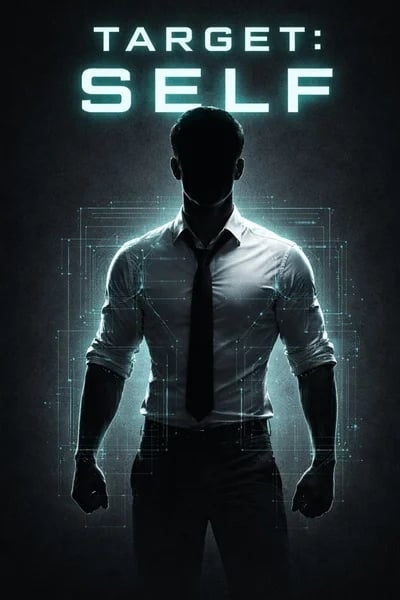
The planet has bled dimensional rifts for forty years, rewriting human genetics and fracturing global history into pre-apocalypse and post-apocalypse epochs. Superpowers are no longer myth. They are state property, cataloged in black files, and deployed like precision munitions against interdimensional invaders. In this cynical landscape, the awakened are celebrated as rock stars but managed as weapons, their lives weighed against mortality statistics and strategic asset values. Thomas Ross enters this machinery at thirty-two, a man whose dreams were buried under tax returns, mortgage statements, and the quiet exhaustion of middle management. When his dormant genes finally ignite, there are no dramatic transformations, only a sterile digital conscription order and a ninety-day countdown to military processing. His ability manifests as the Trainer class, designed to cultivate loyal beasts and amplify allied potential. Facing an empty room and a decade-long gap between puberty and manifestation, Thomas executes a radical conceptual leap. He activates the binding sphere on himself. This self-targeting decision shatters conventional progression frameworks. By fusing the master and the subject into a single biological entity, Thomas creates a closed-loop evolution engine. The system bifurcates into dual interfaces. The calculating operator and the developing vessel operate in tandem. This architectural anomaly grants him unprecedented autonomy. He unlocks cognitive accelerants that freeze time perception for tactical planning, metabolic overrides that transform sleep into rapid cellular regeneration, and diagnostic protocols that reduce human physiology to editable statistics. Stripped of the need to hunt monsters or chase mythical companions, Thomas weaponizes his own humanity. Ordinary exercises become optimized grind sessions, language acquisition compresses into neural downloads, and physical decay reverses under algorithmic perfection. What starts as a desperate maneuver to survive state conscription quickly matures into a calculated campaign of self-optimization, blending corporate ruthlessness with supernatural ascension. The narrative brilliantly fuses urban fantasy with progression mechanics and military procedural elements, creating a world where mystical abilities are filtered through bureaucratic red tape and logistical constraints. Thomas’s journey rejects the typical hero’s journey trope, instead embracing a pragmatic, spreadsheet-driven approach to supernatural mastery. Every skill, every stat point, and every strategic alliance is treated as an investment portfolio requiring careful risk assessment and return calculation. This methodical deconstruction of fantasy tropes grounds the extraordinary in the deeply relatable struggles of adult responsibility.
At fifteen, superpowers are a ticket to life. At thirty two, they are a sentence for the life I built.
My Only Familiar Is Me
Story Chronicles
NODE 01The Self-Binding Protocol
Late AwakeningSelf-BindingSystem Optimization
Archivist Insights
The genesis of Thomas Ross’s supernatural trajectory ignites not with cosmic fanfare but with a sterile electronic draft and a crushing realization that his late-blooming powers are a bureaucratic trap rather than a gift. Trapped in a dim apartment surrounded by unpaid bills and the quiet despair of a life stagnating in middle management, Thomas discovers his dormant genes have finally activated the Trainer class. Standard lore suggests he should hunt beasts or recruit allies, but the logical void of his environment forces a radical pivot. He channels his inaugural binding energy inward, successfully capturing his own consciousness and splitting his existence into dual system interfaces. This unprecedented self-binding shatters conventional progression frameworks, instantly granting him access to hyperfocus algorithms that compress hours of grueling study into blinding mental sprints, metabolic overrides that transform sleep into rapid cellular regeneration, and diagnostic protocols that reduce human physiology to editable statistics. Within days, he systematically dismantles his former life, optimizing his physique beyond natural limits, mastering foreign languages through neural downloads, and accumulating elite civilian certifications that defy standard timelines. When his previous employer attempts to withhold his final paycheck under fabricated negligence claims, Thomas deploys a calculated tactical suppression protocol that freezes his emotional responses and amplifies his perception to predatory levels. He navigates the hostile corporate environment with mechanical precision, neutralizing security personnel without lethal force, extracting the owed funds through psychological dominance, and slipping away from impending legal entanglements by leveraging unexpected alliances with federal agents embedded within his social circle. This early phase establishes a ruthless foundation of self-reliance, proving that supernatural acceleration paired with cold corporate pragmatism can dismantle institutional barriers faster than brute force ever could. As he stands outside the glass towers that once confined him, watching the morning light reflect off his newly sculpted physique, a sharp notification pierces his focus. The government has already flagged his elevated capabilities, and a specialized field agent named Daniel Kim has been dispatched to monitor his movements before the mandatory induction window closes.
◆ Conclusion
Protagonist transforms bureaucratic conscription into personal advantage through unprecedented self-targeting and hyperfocus algorithms.
NODE 02The Corporate Reckoning and Legal Escape
Institutional SubversionScientific AlliancePower Expansion
Archivist Insights
The narrative momentum shifts dramatically as Thomas transitions from civilian survival to full-scale military preparation, navigating a treacherous landscape where supernatural assets are treated as expendable commodities rather than honored soldiers. Upon arriving at the heavily fortified Awakened training facility, he encounters a cohort of hormonal teenagers whose raw potential contrasts sharply with his meticulously engineered baseline. Rather than succumbing to the expected mentorship dynamic, Thomas immediately recognizes the institutional inefficiencies governing their curriculum and exploits systemic loopholes to secure independent training privileges. He forms a symbiotic research partnership with Professor Selina Langstrom, a brilliant engineer whose abilities allow her to analyze and perfect complex machinery, enabling them to conduct dangerous virology experiments that permanently rewrite his immune system architecture. Their collaboration crosses professional boundaries into highly charged territorial negotiations, culminating in a manipulative romantic encounter that Thomas deftly counters using emotional suppression commands and sterilization protocols. This calculated defense preserves his operational autonomy while forcing Selina into a binding contractual framework regarding future evolutionary procedures. Meanwhile, Thomas systematically dismantles the camp’s standardized training regime, utilizing isolated dojo access and sleep-phase energy cycling to exponentially expand his S-Power reserves far beyond natural limitations. He deciphers the hidden mechanics of gravitational manipulation through observation of fellow cadet Mary, uncovers deep connections to his childhood past, and strategically accumulates elite combat certifications that fast-track his military rank despite his unconventional age. When command attempts to restrict his experimental progress due to bureaucratic inertia, Thomas leverages his irreplaceable immunological adaptations to negotiate direct access to classified xenobiology archives and advanced toxicology trials. The escalating tension between institutional oversight and personal ambition reaches a breaking point as restricted containment protocols activate around his isolation chamber. With a new batch of extraterrestrial pathogens queued for testing and General Crowley’s personal authorization looming on the horizon, Thomas realizes that surviving the campus politics may prove more perilous than facing the actual dimensional breaches ahead.
◆ Conclusion
Strategic alliances and suppressed emotions enable exponential power scaling while bypassing rigid military bureaucracy.
NODE 03The Awakened Induction and Camp Integration
Tactical AcclimationEquipment EngineeringPolitical Pressure
Archivist Insights
The narrative escalates into a high-stakes gauntlet of physical conditioning and tactical acclimation as Thomas fully commits to bridging the massive capability gap between civilian optimization and frontline combat readiness. Forced to operate under stringent energy suppression fields that artificially cap his supernatural output, he adapts by focusing exclusively on biomechanical perfection and martial fundamentals, recognizing that true mastery requires instinctual reflexes rather than reliance on numerical advantages. Through rigorous sparring sessions with Master Smith, a veteran operative whose kinetic precision mirrors his own disciplined approach, Thomas develops counter-strategies that exploit micro-timing vulnerabilities and spatial displacement techniques. These clandestine training cycles yield measurable breakthroughs in atmospheric manipulation and gravity-resistant positioning, allowing him to execute aerial maneuvers that defy conventional physics without triggering system alarms. Simultaneously, he navigates complex interpersonal dynamics among his peer group, deliberately maintaining emotional distance to prevent attachment liabilities while quietly observing how each cadet’s unique ability profile intersects with broader mission requirements. When command initiates mandatory equipment distribution involving million-dollar tactical armor systems, Thomas immediately identifies structural upgrade opportunities and petitions for symmetrical weapon mounting configurations that align with his ambidextrous fighting style. This technical advocacy triggers intense scrutiny from administrative overseers who view his nonconformity as a potential security risk, prompting Thomas to deploy calculated compliance strategies that mask his aggressive optimization agenda behind standard regulatory paperwork. The pressure intensifies as unauthorized corporate lobbyists begin pressuring Pentagon officials to halt his experimental virology protocols, fearing market destabilization from revolutionary pharmaceutical breakthroughs. Faced with dwindling time windows and escalating political interference, Thomas accelerates his toxin resistance trials while simultaneously mapping out contingency evacuation routes should diplomatic negotiations collapse. As the final qualification examination approaches, a sudden lockdown directive seals all academic wings, trapping him inside reinforced quarantine sectors alongside volatile pathogen samples. With external communications severed and emergency suppression fields cycling across the perimeter, Thomas must decide whether to trust the compromised chain of command or initiate a rogue extraction protocol before the next dimensional breach forces mass deployment.
◆ Conclusion
Rigorous martial optimization and structural upgrades prepare protagonist for imminent deployment amid rising corporate interference.
NODE 04The Biological Laboratory and Evolutionary Bargain
Deployment NegotiationDual-Role IntegrationHazard Mobilization
Archivist Insights
The climactic convergence of personal ambition and institutional duty culminates in a tense standoff between autonomous evolution and state-controlled deployment schedules as Thomas confronts the brutal reality of interdimensional warfare logistics. Command authorities attempt to standardize his assignment parameters, pushing for routine instructor roles that would squander his exceptional combat potential and isolate him from frontline engagement. Thomas recognizes this reassignment strategy as a deliberate containment measure designed to neutralize unpredictable variables within the assault vanguard, prompting him to leverage his proprietary immunological data as bargaining currency for direct operational clearance. Through meticulous negotiation tactics and strategic information withholding, he forces senior officers to acknowledge that suppressing his field deployment capabilities would compromise critical xenovirology research pipelines essential for long-term planetary defense. The resulting compromise grants him provisional combat status while preserving his laboratory access, effectively transforming him into a dual-role operative capable of conducting battlefield diagnostics and synthesizing emergency countermeasures mid-engagement. As supply chains stabilize and personalized armor systems undergo final calibration, Thomas completes his comprehensive skill matrix integration, merging hyperfocus cognitive acceleration with gravity-manipulation countermeasures and advanced toxicology resistance. Peer relationships solidify into tactical partnerships when coordinated simulation exercises demonstrate seamless synergy between disparate ability profiles, validating his hypothesis that cross-specialization units outperform homogenous squads in hostile environments. The looming threat of immediate mobilization forces rapid finalization of contractual agreements with research partners, ensuring intellectual property rights remain intact despite impending field hazards. With induction orders stamped and transport vessels preparing for orbital insertion, Thomas reviews his accumulated credentials one final time, recognizing that every certification, every statistical threshold, and every negotiated clause was engineered to guarantee survival against forces that treat human life as disposable ammunition. Stepping onto the boarding ramp beneath artificial floodlights, he feels the familiar hum of circulating energy through reinforced plating, knowing that crossing the threshold means abandoning civilian safety forever. As the heavy blast doors begin their slow descent, a priority transmission interrupts the loading sequence, delivering coordinates that point toward an uncharted sector previously marked as extinction-level hazard.
◆ Conclusion
Pragmatic negotiation secures frontline status while preserving research autonomy ahead of extreme hazard mobilization.
Character Lore Pantheon
Thomas Ross
Hyper-pragmaticEmotionally detachedSystematically optimized
Thomas Ross anchors the narrative as a meticulously calculated survivor who refuses to surrender his autonomy to either supernatural destiny or bureaucratic coercion. His core stake revolves around transforming a punitive conscription notice into a structured career ladder, leveraging his unique Trainer class to forge an unbreakable feedback loop between operator and vessel. By treating his own body as both laboratory and weapon, he bypasses traditional power-scaling dependencies, instead relying on hyperfocus algorithms, metabolic overrides, and diagnostic protocols to accelerate his development beyond natural thresholds. Major plot turns revolve around his strategic dismantling of institutional inefficiencies, his calculated navigation of corporate and military lobbying pressures, and his willingness to engage in high-risk virology trials to secure permanent immunological adaptations. His trump card lies in his relentless pragmatism and ability to compartmentalize emotional volatility through specialized commands, allowing him to negotiate favorable contracts, extract optimal training conditions, and maintain operational independence even when surrounded by hierarchical authority. Ultimately, Thomas evolves from a reluctant conscript into a dual-role operative whose synthesis of scientific methodology and combat optimization positions him as an indispensable asset in the ongoing interdimensional conflict.
Selina Langstrom
Analytically ruthlessScientifically obsessiveStrategically manipulative
Selina Langstrom serves as the primary catalyst for Thomas’s accelerated evolution, functioning as both mentor and opportunistic partner in a high-stakes scientific alliance. Her role centers on decoding the mechanical principles behind energy distribution and engineering next-generation tactical armor systems that bridge the gap between human physiology and interdimensional warfare demands. Core stakes involve securing funding, protecting intellectual property from corporate monopolies, and pushing the boundaries of biological adaptation through controlled exposure to terrestrial and extraterrestrial pathogens. Her trump card is her Engineer class ability, which grants her instantaneous blueprint comprehension and structural optimization capabilities, allowing her to revolutionize military hardware and synthesize revolutionary pharmaceutical treatments from Thomas’s unique immune responses. Major plot turns include her initiation of dangerous toxin resistance trials, her manipulative romantic overtures designed to secure genetic advantages for potential offspring, and her eventual reconciliation of personal ambition with institutional obligations after Thomas enforces strict contractual boundaries. Selina’s character arc demonstrates how scientific brilliance can be weaponized when paired with unyielding pragmatism, ultimately transforming her from a detached researcher into a committed co-director of groundbreaking medical and tactical advancements.
Daniel Kim
Charismatic veteranBureaucratically savvyCynically protective
Daniel Kim operates as the grounded anchor to Thomas’s supernatural trajectory, embodying the weary professionalism of an eight-year veteran navigating the harsh realities of portal deployment logistics. His role focuses on translating military jargon into actionable advice, explaining the economic incentives behind awakened conscription, and warning against reckless displays of power that could trigger public panic or administrative penalties. Core stakes involve balancing his responsibilities as a curriculum supervisor with his desire to avoid unnecessary casualties, all while managing the psychological expectations of teenage recruits who idolize superhero narratives. His trump card lies in his extensive field experience and intimate knowledge of Corps hierarchies, allowing him to provide crucial insights into rank progression, certification exploitation, and the hidden dangers of energy depletion cycles. Major plot turns include his initial arrival as a seemingly careless beach-boy archetype, his gradual revelation as a highly decorated captain with deep institutional connections, and his consistent provision of tactical guidance that enables Thomas to navigate early camp politics without drawing unwanted scrutiny. Daniel’s presence highlights the stark contrast between youthful idealism and hardened veteran realism, serving as a vital informational bridge between civilian misconceptions and the brutal economics of interdimensional warfare.
Fair Use & IP Notice
MythFan is a community-driven, fan-contributed wiki & archive operating under Fair Use guidelines. MythFan does not host, store, or distribute any novel downloads or copyrighted media assets. All content is contributed and maintained by community members. If you believe any content infringes upon your intellectual property rights, please send a notice to [email protected] — we will review and remove infringing material within 3–7 business days upon verification.
💬
Sanctuary Discussion
My Only Familiar Is Me · Forum
🔑 Sign in to participate in discussions
Sign InProject Sanctuary · Native Discussion System