📊 Editorial Consensus89%
Monarch Litrpg
by Extra27
● OngoingRoyalroad
#LitRPG#Progression#War and Military#Cultivation#Male Lead#Action
Archivist Notes
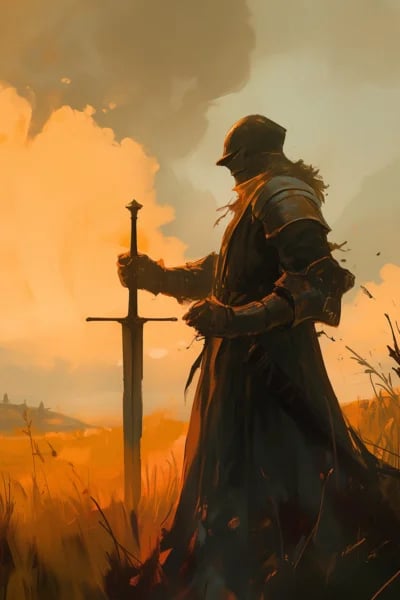
The stench of copper and rot fills the air as consciousness violently reassembles in a graveyard of shattered steel and frozen limbs. Rain mixes with spilled blood, painting the earth a bruised crimson under a moonless sky. This is no dream, nor does it resemble the quiet dorm rooms of a past life. Instead, reality crashes down with the weight of a fallen empire. A medieval fortress town looms in the distance, its crumbling walls guarding an army built on desperation and divine contracts. Here, strength is measured in glowing numbers, class tiers, and the ruthless calculus of survival. The narrative masterfully fuses gritty military realism with the cold precision of a progressive roleplaying game, where every swing of a blade triggers floating notifications, stat increments, and the haunting promise of evolution. At the center of this crucible stands Rayne Frayser, a modern soul trapped inside the broken vessel of a disgraced duke’s bastard son. Branded a traitor and cast into the forsaken ranks, he inherits a legacy of betrayal, a cursed surname, and a kingdom eager to see him crushed by monsters. Yet beneath the mud and rusted armor lies a dormant potential waiting to ignite. His mind clashes between Earthly logic and a world governed by mana ley lines, ancient houses, and predatory dungeons. As he learns to navigate the brutal hierarchy of soldiers, nobles, and mages, the system awakens, granting him forbidden abilities that defy mortal limits. The journey begins not with glory, but with the desperate need to survive another night, proving that even the lowest rung of the military ladder can climb toward monarchy if one dares to steal power from the fallen. Every level gained is a step away from obscurity, and every stolen skill is a weapon forged in the fires of desperation. The world breathes danger, and the protagonist walks straight into its throat. The integration of tactical combat, bureaucratic intrigue, and systematic progression creates a relentless engine that drives the story forward, binding personal survival to the fate of kingdoms.
Humans have killed us for too long, humans have used our bodies as armour for too long, humans have ruled the earth for too long with their feeble bodies and weapons of war.
Monarch Litrpg
Story Chronicles
NODE 01Battlefield Rebirth And System Awakening
TransmigrationSystem AwakeningMilitary HierarchySkill Acquisition
Archivist Insights
Consciousness returns amidst a slaughterhouse of frozen limbs and caked blood, where the protagonist must instantly reconcile two fractured identities before the morning sun rises. Waking in the armor of a dead forsaken soldier, he navigates a landscape of corpses, goblin trails, and terrified conscripts while a digital interface overlays his vision, transforming survival into a calculable equation. The initial hours test his adaptability as he dodges panicked sentries, secures basic gear, and undergoes a tense interrogation where he narrowly avoids execution by fabricating a plausible alibi involving a stolen healing potion. Within the fortified walls of Fort Algar, systemic prejudice manifests daily. His cursed surname marks him as expendable fodder, forcing him to endure public humiliation, forced labor, and deliberate sabotage from privileged recruits. Yet beneath the oppression, his unique parameters begin to shift. Through calculated engagement with low-tier pests, he accumulates experience, unlocks foundational combat techniques, and activates a dormant ability that allows him to harvest traits from defeated foes. Each victory quietly chips away at the rigid hierarchy, turning his reputation from filthborn pariah to reluctant survivor. The turning point arrives during a sanctioned skirmish against a massive green brute, where tactical improvisation and raw endurance allow him to secure a rare regenerative trait that fundamentally alters his combat sustainability. As the dust settles, the realization dawns that mere obedience will not suffice in a system designed to grind dissenters into paste. Command structures demand absolute loyalty, but true advancement requires seizing initiative, manipulating chain of command protocols, and leveraging hard won victories to carve out space in a hostile environment. The path forward demands constant vigilance, strategic resource management, and the willingness to break rules when survival depends on it. With new capabilities locked into his core matrix, the stage is set for rapid escalation, though the looming threat of higher tier predators and internal political maneuvering ensures that peace remains an illusion. But the horizon darkens as reports of coordinated monster migrations flood the command tents, signaling that the calm before the storm has already shattered, and the coming siege will separate the survivors from the meat.
◆ Conclusion
Establishes survival baseline and grants foundational progression mechanics.
NODE 02Apex Predator Assault And Judicial Combat
Apex Predator AssaultJudicial CombatAristocratic ConflictTactical Adaptation
Archivist Insights
The fragile equilibrium of frontier defense shatters when elite monster forces breach perimeter defenses, exposing the garrison to annihilation and forcing commanders to deploy unconventional tactics against overwhelming biological superiority. High level brutes smash through wooden barricades while archers struggle to penetrate thick hides, creating a panic that threatens to collapse the entire defensive line. Amid the chaos, the protagonist steps beyond prescribed roles, engaging directly with towering threats while coordinating flanking maneuvers that turn a rout into a controlled counteroffensive. His aggressive positioning draws fire, absorbs crushing impacts, and systematically dismantles enemy vanguard units through calculated strikes aimed at structural weak points rather than brute force. The campaign culminates in a decisive confrontation where veteran officers and arcane specialists converge to eliminate a commanding apex predator, shifting the balance of attrition decisively in humanity favor. Following the battlefield victory, internal tensions erupt as aristocratic rivals attempt to reclaim lost prestige through formalized judicial combat. A high born noble leverages institutional privilege to accuse the protagonist of theft, demanding execution to restore familial honor and publicly validate his superior status. Rather than submit to predetermined verdicts, he accepts the terms of lethal trial, utilizing refined footwork, shield discipline, and psychological pressure to dismantle his opponent technique by technique. The duel becomes a masterclass in controlled aggression, where calculated parries and precise counters strip away the rival confidence until submission becomes inevitable. Victory secures not only legal absolution but also material compensation and shifted social dynamics within the barracks. However, triumph breeds resentment, and the defeated faction vows silent retaliation through administrative sabotage and supply manipulation. As the victor consolidates gains, whispers of deeper conspiracies emerge regarding missing expeditions and classified dungeon incursions, hinting at larger operations that extend beyond frontier skirmishes. The resolution of personal grievances temporarily stabilizes command cohesion, yet unresolved logistical discrepancies and unverified casualty reports suggest that institutional corruption runs deeper than battlefield failures. With leadership transitioning to newly appointed operational directors, upcoming assignments will test resource allocation strategies, team retention metrics, and contingency planning against unpredictable subterranean threats. The aftermath of judicial combat proves that institutional frameworks can be exploited, but true authority requires controlling information flow and anticipating bureaucratic countermeasures before they materialize.
◆ Conclusion
Validates combat prowess and dismantles aristocratic intimidation tactics.
NODE 03Deserter Siege And Ecological Warfare
Logistics ReconnaissanceRogue Operative SiegeEcological WarfareMerit Promotion
Archivist Insights
Official directives redirect personnel toward remote logistics corridors, transforming routine transport operations into high risk reconnaissance missions across uncharted wilderness zones. Initial waypoints reveal signs of civilian massacres and disturbed burial sites, indicating organized criminal activity operating outside standard military jurisdiction. Investigation uncovers evidence of abandoned homesteads, concealed weapon caches, and encrypted correspondence pointing to rogue operatives exploiting wartime resource shortages. Intelligence gathering leads to fortified encampments protected by natural terrain features and disciplined watch rotations, necessitating stealth penetration rather than direct assault. Covert insertion reveals heavily armed defectors led by a mana augmented combatant capable of projecting destructive energy fields that neutralize conventional infantry formations. Direct engagement proves fatal for standard equipment, requiring environmental exploitation and ecological manipulation to offset numerical disadvantages. Strategic deployment of native apex predators redirects hostile attention, creating diversionary pathways that isolate command nodes and sever communication networks. Sudden wildlife intervention eliminates primary threats while minimizing allied casualties, demonstrating how ecological awareness surpasses technological superiority in asymmetric warfare scenarios. Post engagement recovery involves rapid triage, inventory reconciliation, and evidence documentation to satisfy higher command oversight requirements. Administrative debriefings confirm operational success while highlighting systemic vulnerabilities in frontier patrol scheduling and intelligence dissemination protocols. Leadership restructuring follows merit based evaluations, promoting field tested operators over politically connected appointees despite institutional resistance. New assignments emphasize dungeon exploration, artifact retrieval, and territorial mapping initiatives that push personnel beyond established safety margins. Preparation phases include equipment optimization, nutritional supplementation, and mental conditioning to withstand prolonged isolation in hostile environments. As departure timelines approach, weather patterns shift, atmospheric pressure drops, and distant thunder echoes across mountain ranges, suggesting incoming geological instability. Command centers initiate emergency protocols, mobilizing engineering crews to reinforce structural supports and evacuate nonessential personnel from vulnerable sectors. The convergence of environmental hazards and operational deadlines creates a volatile timeframe where hesitation guarantees failure and decisive action determines survival outcomes. Final briefing sessions outline extraction routes, fallback positions, and contingency communications, ensuring that even catastrophic setbacks remain manageable within predefined parameters.
◆ Conclusion
Neutralizes elite threat through environmental strategy and earns command trust.
NODE 04Subterranean Expedition And Attribute Farming
Subterranean ExpeditionAttribute FarmingIsolation SurvivalCartographic Discovery
Archivist Insights
Authorized deployments transition into subterranean excavation operations targeting uncharted cavern systems rumored to contain valuable mineral deposits and historical artifacts. Entry portals manifest as swirling energy conduits that displace personnel across dimensional thresholds, depositing teams into claustrophobic tunnel networks illuminated by bioluminescent flora and suspended debris fields. Initial corridors feature minimal resistance, allowing rapid advance toward designated objective markers while maintaining formation integrity and communication relays. Unexpected encounters with armored insectoid entities require adaptive shielding techniques and joint targeting strategies to overcome chitinous plating and regenerative capabilities. Subsequent chambers introduce animated skeletal combatants wielding corroded weaponry, presenting opportunities for skill duplication and attribute augmentation through systematic elimination protocols. Prolonged exposure to subterranean atmospheres triggers physiological fatigue, mandating scheduled rest intervals and caloric replenishment to maintain cognitive function and motor precision. Resource scarcity forces reliance on harvested organic matter and preserved rations, while navigation challenges demand continuous mapping updates and landmark verification to prevent disorientation. Isolation events fracture squad cohesion, separating operators from support units and eliminating external reinforcement channels. Solo survival mandates autonomous decision making, risk assessment, and tactical improvisation against escalating threat matrices. Extended exploration yields topographical charts revealing previously undocumented vertical shafts and concealed exit vectors that circumvent primary hazard zones. Recovery sequences involve meticulous wound treatment, equipment maintenance, and statistical tracking to monitor performance degradation and capability expansion. Return journeys traverse collapsed infrastructure and unstable substrates, requiring careful route selection and load distribution to avoid structural failures. Emergence into daylight environments triggers sensory recalibration as circadian rhythms realign with external light cycles and ambient temperature fluctuations. Medical evaluation confirms physiological stability while documenting enhanced baseline metrics and acquired proficiency certifications. Administrative processing integrates recovered data into central databases, updating threat classifications and adjusting deployment schedules accordingly. Forward planning incorporates lessons learned from previous engagements, emphasizing agility over brute force, precision over volume, and preparation over reaction. Upcoming operations will target secondary objectives requiring specialized instrumentation and cross disciplinary expertise to overcome engineered obstacles and automated defense mechanisms.
◆ Conclusion
Achieves rapid attribute growth and secures critical navigational assets.
Character Lore Pantheon
Rayne Frayser
AdaptiveRuthlessly PragmaticSystematically Optimized
Rayne Frayser operates as a marginalized frontline operative thrust into a systemic hierarchy that treats his lineage as expendable collateral. His core stake revolves around overcoming institutional discrimination while securing sustainable growth through combat driven attribute accumulation and skill harvesting. Primary advantages include a dormant ancestral framework that unlocks exceptional mana sensitivity and a unique acquisition mechanism that converts defeated enemies into permanent enhancements. Major turning points encompass surviving initial battlefield integration, securing regenerative capabilities through apex predator engagements, navigating judicial combat against aristocratic rivals, and executing independent subterranean operations that yield critical cartographic intelligence. His trajectory demonstrates how calculated risk taking and environmental manipulation can bypass traditional power structures, establishing a foundation for independent command authority despite persistent political opposition and resource limitations.
Casper
AnalyticalSecretly LoyalMana Cultivation Expert
Casper functions as a highly specialized arcane specialist attached to frontier command structures, providing magical suppression and tactical analysis during high threat engagements. Her primary objective centers on maintaining operational continuity while managing mana expenditure and spell matrix calibration under extreme combat conditions. Key strengths include advanced cultivation methodologies, precise elemental projection, and strategic resource allocation that complements conventional infantry maneuvers. Significant developments involve intervening during critical confrontations, preserving vital personnel during cascading failures, and privately mentoring emerging operatives through structured training regimens that accelerate personal development beyond standard institutional curricula. Her actions reveal underlying allegiances tied to historical patronage networks, demonstrating how professional dedication often masks deeper institutional loyalties that influence decision making processes during ambiguous operational windows.
Captain Edran Sinclair
CalculatingMercenary PragmatistHierarchical Strategist
Captain Edran Sinclair commands military operations through a blend of aristocratic privilege and battlefield pragmatism, prioritizing mission completion over political optics or ceremonial tradition. His fundamental stake involves maintaining unit cohesion while navigating complex command chains that frequently conflict with higher directive priorities. Essential capabilities include rapid threat assessment, resource redistribution protocols, and diplomatic navigation that balances noble expectations with frontline realities. Critical shifts occur during large scale monster incursions where conventional defensive postures fail, forcing adaptive deployment strategies that leverage unconventional personnel assignments and experimental tactical frameworks. His leadership style emphasizes merit recognition regardless of background, fostering an environment where operational effectiveness supersedes hierarchical rigidity, ultimately enabling streamlined execution of high priority objectives despite institutional friction and competing agenda pressures.
Fair Use & IP Notice
MythFan is a community-driven, fan-contributed wiki & archive operating under Fair Use guidelines. MythFan does not host, store, or distribute any novel downloads or copyrighted media assets. All content is contributed and maintained by community members. If you believe any content infringes upon your intellectual property rights, please send a notice to [email protected] — we will review and remove infringing material within 3–7 business days upon verification.
💬
Sanctuary Discussion
Monarch Litrpg · Forum
🔑 Sign in to participate in discussions
Sign InProject Sanctuary · Native Discussion System