📊 Editorial Consensus89%
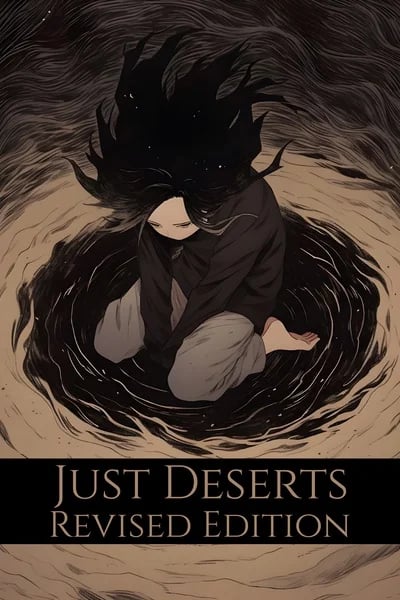
Just Deserts
by Elbowsnapper
● CompletedRoyalroad
#Progression#Anti-Hero Lead#Super Heroes#Strategy#Psychological#Action
Archivist Notes
Six-year-old Hisoka Higawara literally falls apart on a Musutafu beach, his body dissolving into a million grains of sand while he tries to calculate the exact social response required to stop his friend Nanami from crying. This visceral introduction grounds his quirk and his core psychological driver. Hisoka processes the world through hyper-logical observation, suppressing his own emotions to avoid hurting others based on a promise he made to his Uncle Sajin. When Nanami and her parents are abducted, and her parents are later found dead in the ocean, the world moves on. Hisoka refuses. The premise flips the standard hero journey on its head. Hisoka does not want to save the world; he is hijacking the hero system to gain the legal authority, resources, and mobility required to hunt down the human traffickers who stole his only friend. His cheat is not just his omnidirectional sand-vision or his ability to reconstruct his body from a single grain, but his terrifying, single-minded obsession masked behind the polite facade of a top-tier student.
The world operates on a strict legal framework where quirk usage without a license is heavily penalized, creating a massive barrier for Hisoka. He must maintain perfect grades and a spotless public image to secure his place at U.A. High School, all while secretly running a parallel investigation into cold-case abductions. The social hierarchy forces his choices; he cannot simply attack suspects without becoming a villain himself, so he learns to manipulate social dynamics, engineering situations where adults give him exactly what he wants. He studies his peers not just to make friends, but to build mental models of their empathy and morality, using them as a compass when his own pragmatism threatens to drag him into darkness. When the League of Villains attacks his class, the geography and faction dynamics shift. The hero system proves fragile, and the death of his classmates shatters his illusion that he can play by the rules. He realizes that waiting for a hero license will take too long, pushing him to cross the line into vigilantism.
I was walking the path of a hero in falsity, not to save the world as she had or in aspiration of becoming truly good.
Just Deserts
Story Chronicles
NODE 01The USJ Tragedy and Shattered Illusions
USJ InvasionSurvivor GuiltVigilante Shift
Archivist Insights
The Unforeseen Simulation Joint invasion serves as the brutal awakening for Class 1-A, but for Hisoka, it is a catastrophic failure of the system he relies on. When the portal villain scatters the students, Hisoka uses his sand network to cushion their falls, but he cannot save Koji Koda and Rikido Sato, who are killed by the villains. The reversal hits hard when Aizawa, battered and broken, tells the surviving students to quit, only for the class to stand united in defiance. Hisoka stands with them, but his internal monologue reveals a crushing guilt; he feels responsible for their deaths because his mind was entirely focused on his own hidden agenda rather than protecting his peers. During the attack, Hisoka threads his sand through the facility, maintaining multiple perspectives to track the scattered students. He watches Eraserhead sacrifice himself to buy them time, a stark contrast to Hisoka's own selfish motivations. The death of Koda and Sato leaves an empty desk in the classroom that haunts Hisoka, serving as a constant physical reminder of his inadequacy. This emotional gut-punch destroys his belief that he can safely navigate the hero system while keeping his secrets. The realization that the legal framework of heroics is too slow and fragile to stop organized violence pushes him to abandon his cautious approach. He decides he must acquire power and information by any means necessary, setting up his descent into vigilantism during his upcoming internships.
◆ Conclusion
The USJ attack kills two classmates, shattering Hisoka's faith in the hero system and pushing him toward ruthless vigilantism.
NODE 02The Fukuoka Internship and Moral Event Horizon
BlackmailMoral Event HorizonFukuoka Investigation
Archivist Insights
Hisoka deliberately tailors his Sports Festival performance to attract the Hawks Agency in Fukuoka, using the internship as cover to stalk Kimiko Habiki, the mother of a suspected trafficker. Unable to gather evidence legally, he corners Inaba, a teenage thief with a memory-reading quirk, and blackmails her into infiltrating Kimiko's home to read her mind while she sleeps. Hisoka uses his sand network to map the entire city, tracking Inaba's movements and discovering the squalid hideout where she and her brother are kept by a ruthless gang. He confronts her in an alleyway, using his omnidirectional vision to recite the exact PIN codes and addresses she stole that night, proving he has absolute leverage over her. The reversal here is Hisoka's internal shift when Inaba breaks down in absolute terror, expecting him to hurt her. Looking at her crying, Hisoka realizes he has become the very monster he is hunting. He consciously channels the empathy of his classmates, specifically Eijiro Kirishima, to comfort her and promise to rescue her younger brother. He crosses the moral event horizon by committing breaking and entering, blackmail, and kidnapping, but he anchors his humanity by successfully extracting Inaba and her brother. The hook left behind is the information Inaba steals from Kimiko's mind: a letter declaring the death of Kaito Habiki, signed by a mysterious boss, which points Hisoka directly toward I-Island and a scientist named Susumu Hoshi.
◆ Conclusion
Hisoka blackmails a teenage thief to read a suspect's mind, crossing into vigilantism while rescuing her brother to maintain his humanity.
NODE 03I-Island Terror and The Blood Revelation
I-Island AttackQuirk UpgraderNanami Rescued
Archivist Insights
Hisoka travels to I-Island under the guise of a school trip, intending to kidnap and interrogate scientist Susumu Hoshi. His meticulous plan is derailed when David Shields stages a fake terrorist attack to steal a Quirk Upgrader, taking the entire island hostage. The massive reversal hits when Hisoka infiltrates the tower and overhears David explaining that the unique base for the Upgrader serum is blood donated by an anonymous philanthropist. Hisoka instantly deduces that the blood belongs to Nanami. David Shields, trying to save All Might's fading power, unknowingly used the blood of the girl Hisoka has been hunting for eight years. The confrontation in the vault is chaotic, with Wolfram tearing the room apart with metal manipulation while the U.A. students fight for their lives. Hisoka ignores the battle entirely, focusing solely on securing the briefcase containing the serum and abducting David. He drags the scientist out of the shattered window, using his sand to control their descent to the rooftops below. The emotional peak is a blinding rage that causes Hisoka to force David to lead him to Susumu's hidden lab. The gut-punch lands when Hisoka finally breaches the basement and finds Nanami alive, missing an arm but still possessing her radiant spirit after eight years of captivity. The consequence of his reckless, unauthorized rescue is his immediate arrest by island security, leaving him under house arrest and facing expulsion from U.A. High School.
◆ Conclusion
Hisoka discovers the Quirk Upgrader uses Nanami's blood, abandons his classmates to kidnap David, and finally rescues Nanami from eight years of captivity.
NODE 04Tartarus Interrogation and The Shadow War
Tartarus InterrogationAll For OnePsychological Warfare
Archivist Insights
Confined to his manor, Hisoka finally confesses his years of lies, illegal investigations, and vigilante crimes to Uncle Sajin, expecting rejection but receiving profound forgiveness. This emotional resolution clears his conscience just as All Might and the Hero Public Safety Commission President arrive to recruit him. They need him to interrogate Susumu Hoshi in Tartarus about All For One, the legendary villain who steals quirks. The interrogation room in Tartarus is a sterile, heavily monitored cage, but Hisoka turns it into his own theater. He uses his quirk to sculpt a perfect, moving sand replica of Nanami as a child, forcing Susumu to confront the humanity of the girl she kept in a basement for nearly a decade. Susumu's rapid eye movements and clinical detachment crack under the weight of Hisoka's silent, omnidirectional pressure. Through this psychological dominance, Hisoka confirms the link between Susumu's trafficking ring and All For One's quirk-hoarding empire. He realizes that Nanami's quirk was kept inside her body because its amplification potency grew with age, making her a living battery for the Upgrader serum. This revelation shifts the stakes from a personal rescue mission to a national security crisis. The story leaves off with Hisoka stepping fully into the shadow war, no longer a rogue vigilante, but a sanctioned weapon armed with the truth, the backing of the highest authorities, and the unwavering support of the friend he finally brought home.
◆ Conclusion
Hisoka uses psychological warfare in Tartarus to link the trafficking ring to All For One, transitioning from rogue vigilante to sanctioned government weapon.
Character Lore Pantheon
Hisoka Higawara
Hyper-observantEmotionally repressedRuthlessly pragmatic
Hisoka views the world through a thousand grains of sand, processing social cues as data points to mimic normal human behavior. His entire existence is dedicated to finding his abducted childhood friend, Nanami. He treats his U.A. education and hero training purely as a means to acquire a legal license and investigative resources. When the system fails him, he readily breaks the law, blackmails criminals, and kidnaps suspects, constantly battling the fear that he is losing his humanity. His ultimate trump card is his omnidirectional sand network, which allows him to monitor entire cities, reconstruct his body from fatal wounds, and manipulate his environment with terrifying precision.
Nanami Kureta
RadiantEmpatheticResilient
Nanami is the ghost that drives Hisoka's every action. Abducted at age ten alongside her parents, who were subsequently murdered, she was held captive in a basement on I-Island for eight years to harvest her blood for a Quirk Upgrader serum. Despite enduring unimaginable trauma, she retains her bright, energetic personality and her deep affection for Hisoka. Her quirk allows her to amplify the energy and emotional receptivity of those she touches. Her miraculous rescue shatters Hisoka's vigilante isolation, forcing him to confront his guilt, accept his guardians' love, and finally transition from a boy living a stolen dream to a hero fighting for his own future.
Sajin Higawara
PerceptiveUnconditionally supportiveGrounded
A pro-hero with a partial sand-transformation quirk, Sajin raised Hisoka after the boy's parents died. He recognizes Hisoka's emotional blindness early on and spends years teaching him the invisible social rules of human interaction, always anchoring his lessons in patience and pride. When Hisoka finally confesses his years of deceit, illegal investigations, and vigilante actions, Sajin does not react with the anger Hisoka expects. Instead, he takes the blame for forcing the boy to make a promise to move on, validating Hisoka's relentless pursuit of justice. Sajin represents the ideal hero Hisoka strives to become, proving that true strength lies in unwavering support and moral clarity.
Fair Use & IP Notice
MythFan is a community-driven, fan-contributed wiki & archive operating under Fair Use guidelines. MythFan does not host, store, or distribute any novel downloads or copyrighted media assets. All content is contributed and maintained by community members. If you believe any content infringes upon your intellectual property rights, please send a notice to [email protected] — we will review and remove infringing material within 3–7 business days upon verification.
💬
Sanctuary Discussion
Just Deserts · Forum
🔑 Sign in to participate in discussions
Sign InProject Sanctuary · Native Discussion System