📊 Editorial Consensus89%
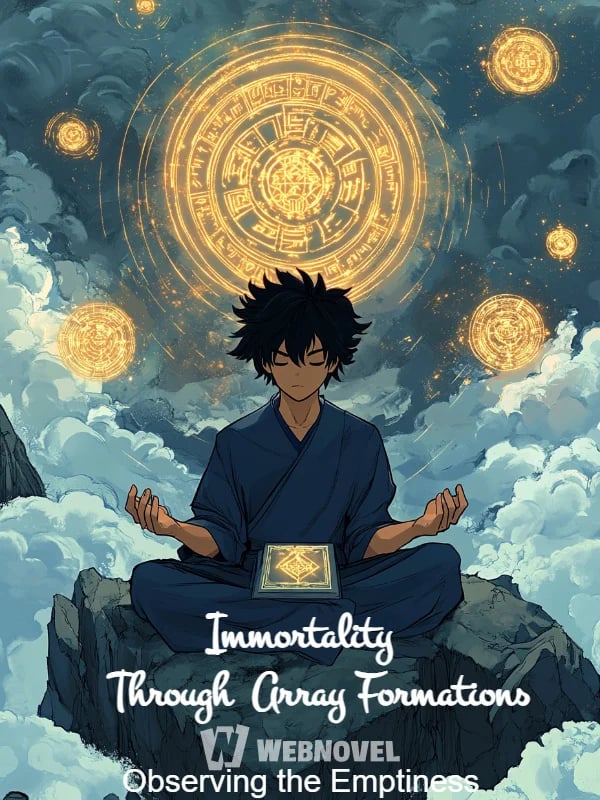
Immortality Through Array Formations
by Observing the Emptiness
● OngoingWebnovel
#SLICEOFLIFE#CULTIVATION#GENIUS#LEVELUP#ACADEMY#POORTORICH
Archivist Notes
In the twenty-two thousandth year of the Taoist Calendar, the cultivation world operates like a rigid industrial machine where spiritual energy is hoarded by aristocratic clans and monopolized sects. Loose cultivators scrape by as disposable labor, their dreams of immortality suffocated under the weight of material scarcity and systemic inequality. Amidst this stratified hellscape sits ten-year-old Mo Hua, a physically frail youth born with mediocre spiritual roots yet possessing an unusually potent divine sense. His existence is defined by quiet desperation, balancing parental sacrifice against the crushing economic realities of a society that trades life force for survival. The narrative brilliantly merges traditional xianxia progression with gritty socioeconomic realism, transforming cultivation into a meticulous craft rather than mere mystical combat. Every breath of spiritual power carries a price tag, and mastery demands resources that the lower classes can never afford.
The genesis of Mo Hua s extraordinary path ignites within the silent depths of his Sea of Consciousness, where an ancient, incomplete Taoist Stele materializes alongside fragmented memories of a past life spent as an overworked graphic designer. This artifact operates as a flawless cultivation simulator, granting him the ability to paint formation patterns directly onto its void surface. The true genius of this mechanic lies in its paradoxical reward system. While painting drains his divine sense, wiping the completed pattern instantly replenishes it while simultaneously leaving behind a permanent micro-amplification. This endless loop transforms divine sense training from a rare breakthrough dependency into a grindable, reproducible asset. Mo Hua weaponizes this stele to bypass centuries of orthodox formation pedagogy, turning his physical weakness into an intellectual monopoly. Dawn breaks over the sect peaks, casting long shadows across his makeshift study floor as he drills complex elemental arrays through infinite repetition. The quiet solitude of his underground chamber becomes a crucible where mortal limitations are systematically dismantled through sheer computational persistence.
He navigates the treacherous waters of academic fraud, deliberately embedding structural flaws in ghostwritten assignments to mask his brilliance while securing spirit stones for daily sustenance. This calculated deception establishes his foundational survival strategy, blending psychological manipulation with meticulous execution. Behind the massive stone at the mountain foot, he trades whispered favors for currency, funding his meager existence while concealing his true potential from instructors who measure worth solely through standardized assessments. The narrative tension escalates when the ancient artifact fully manifests, revealing a profound mechanism that defies orthodox cultivation laws. Rather than suffering neural degradation from excessive mental exertion, Mo Hua discovers that erasing painted formations instantly restores his depleted divine sense while permanently amplifying his cognitive capacity. This revelation shatters the fundamental constraints of his realm, allowing him to drill complex patterns through infinite repetition without fear of heavenly backlash.
Presence is valued for utility; absence is valued for possibility!
Immortality Through Array Formations
Story Chronicles
NODE 01The Void Stele Awakens
Academic FraudDivine Sense AmplificationSystemic Inequality
Archivist Insights
Ten-year-old Mo Hua navigates the brutal meritocracy of Tongxian Gate, where academic excellence translates directly to social survival and spiritual advancement. Operating on the fringes of outer sect hierarchy, he exploits his unparalleled divine sense to ghostwrite formation assignments for wealthy heirs, meticulously planting six deliberate errors to mask his brilliance and avoid suspicion. This calculated deception establishes his foundational survival strategy, blending academic fraud with psychological manipulation. Behind the massive stone at the mountain foot, he trades whispered favors for spirit stones, funding his meager existence while concealing his true potential from instructors who measure worth solely through standardized assessments. The narrative tension escalates when the ancient Taoist Stele fully manifests within his consciousness, revealing a profound mechanism that defies orthodox cultivation laws. Rather than suffering neural degradation from excessive mental exertion, Mo Hua discovers that erasing painted formations instantly restores his depleted divine sense while permanently amplifying his cognitive capacity. This revelation shatters the fundamental constraints of his realm, allowing him to drill complex patterns through infinite repetition without fear of heavenly backlash. He systematically deconstructs basic elemental arrays, achieving proficiency that surpasses senior disciples despite his stagnant qi refinement stage. As dawn breaks over the sect peaks, his relentless nocturnal practice cements a new paradigm of learning, transforming theoretical knowledge into instinctual mastery. The quiet solitude of his underground study hall becomes a crucible where mortal limitations are systematically dismantled through sheer computational persistence. Yet beneath this veneer of academic triumph lies an impending crisis, as the rigid examination cycle approaches and the sect leadership prepares to audit every disciple s progress, threatening to expose his unauthorized shortcuts and dismantle his carefully constructed facade. The looming assessment looms like a guillotine, ready to sever his future if his fabricated competence cracks under scrutiny.
◆ Conclusion
Mo Hua weaponizes a consciousness artifact to bypass cultivation limits, turning mental exhaustion into an infinite grinding loop.
NODE 02Market Stalls and Silent Debts
Commercial ExploitationFamilial SacrificeResource Monopoly
Archivist Insights
The harsh economics of loose cultivator life crush ordinary families under the weight of tuition fees and medical expenses, forcing desperate measures just to maintain baseline stability. Mo Hua channels his stele-forged expertise into the commercial sector, negotiating a deposit-based contract with a struggling formation pavilion to mass-produce simple illumination arrays for pocket change. Each successful drawing represents a direct translation of metaphysical theory into tangible survival currency, bridging the chasm between spiritual practice and daily bread. He purchases a fire-resistant hairpin for his mother, shielding her from occupational hazards while symbolizing his transition from passive beneficiary to active provider. When his father returns battered from a monster hunting expedition, the household faces immediate financial collapse due to injured teammates and mounting debts. Mo Hua quietly absorbs the burden, dedicating sleepless nights to mastering advanced earth-element structures that command higher market value. The transactional nature of his trade exposes him to exploitative merchants and class-conscious stewards who test his limits before granting legitimacy. Despite bureaucratic hurdles and deposit requirements, he leverages his father s reputation among monster hunters to secure favorable terms, establishing a sustainable income stream. His growing proficiency catches the attention of local craftsmen and neighboring artisans, creating an informal network of patronage that operates entirely outside sect oversight. As winter approaches, the steady accumulation of spirit stones transforms from a fragile hope into a concrete lifeline, yet the commercial success attracts unwanted scrutiny. Wealthy factions monitor the sudden influx of affordable formations, suspecting hidden masterminds behind the cheap production line. The delicate balance between grassroots entrepreneurship and elite suppression tightens like a vice, pushing Mo Hua toward inevitable confrontation with entrenched monopolies that control the region s spiritual infrastructure. The market square buzzes with clandestine deals, where every exchanged coin fuels a silent war over resource distribution and cultural capital.
◆ Conclusion
Grassroots formation contracting bridges spiritual theory and survival economics, attracting dangerous elite scrutiny.
NODE 03The Instructor s Gaze and Hidden Mentor
Covert MentorshipPedagogical SubversionEsoteric Advancement
Archivist Insights
Sect authorities begin tightening academic controls, introducing punitive inheritance fees that threaten to commodify even basic cultivation techniques and strip students of their remaining autonomy. Mo Hua navigates these institutional barriers by selectively attending classes while secretly advancing his formation comprehension through structured trial and error. His unconventional methods draw the sharp attention of Instructor Yan, a strict pedagogical figure whose rigorous corrections mask a deeper fascination with unorthodox talent. During routine assignments, Yan recognizes the unmistakable signature of Mo Hua s brushwork, tracing it back to the very diagrams delivered to the local trading pavilion. Confrontation seems inevitable, yet the instructor chooses strategic silence, recognizing that exposing a gifted child would only invite destructive interference from rival factions. Instead, Yan orchestrates a covert mentorship pipeline, subtly guiding Mo Hua toward specialized compound formations that require precise divine sense calibration. This clandestine guidance accelerates Mo Hua s progression, unlocking seventh-pattern arrays that bridge the gap between amateur drafting and professional mastery. Simultaneously, whispers of a reclusive expert named Mr. Zhuang spread through scholarly circles, promising access to ancient texts that predate current cultivation doctrines. Mo Hua secures an audience with this mysterious teacher, entering a secluded mountain residence where forbidden knowledge flows freely. Under Zhuang s tutelage, he deciphers meditation techniques that dramatically accelerate neural recovery, compounding his stele advantages into an unstoppable learning engine. The convergence of institutional neglect, covert mentorship, and esoteric instruction creates a perfect storm of accelerated development. Yet each breakthrough triggers deeper mysteries within the Taoist Stele, hinting at dormant protocols waiting to be activated. As rival disciples grow suspicious of his rapid ascent, the quiet scholar must prepare for a reckoning where academic validation clashes with martial reality. The mountain paths echo with footsteps of unseen pursuers, and the boundaries of his sanctuary begin to fracture under external pressure.
◆ Conclusion
Institutional silence and hidden tutoring forge a protected corridor for accelerated metaphysical mastery.
NODE 04Blood Oaths and Formation Barricades
Class WarfareTactical DeploymentCommunity Defense
Archivist Insights
Social fractures widen as aristocratic bloodlines assert dominance through intimidation and economic strangulation, forcing common cultivators into defensive postures. The arrogant scion of the Qian clan launches a public campaign of humiliation, targeting low-status practitioners to reinforce hierarchical boundaries and extract tribute. Mo Hua finds himself caught in the crossfire when his protective circle of childhood friends intervenes against systemic bullying, escalating tensions beyond verbal sparring into physical violence. Rather than relying on brute strength or conventional combat spells, he defaults to his formation expertise, deploying a hastily constructed explosive array that neutralizes the aggressor with surgical precision. The resulting detonation sends shockwaves through the local artisan district, demonstrating that metaphysical knowledge can level the playing field against superior physical cultivation. Authorities scramble to contain the fallout, while underground networks of loose cultivators celebrate the unexpected reversal of power dynamics. Zhang Lan, a seemingly idle Taoist Court official, observes the aftermath with calculating interest, recognizing the tactical implications of civilian deployment of offensive formations. Meanwhile, veteran monster hunters seek Mo Hua s services to insulate their equipment against beast attacks, transforming his defensive skills into essential wartime preparation. The community slowly coalesces around his workshops, forming an implicit resistance network built on shared vulnerability and mutual protection. As festival preparations commence, the underlying threat of organized crackdowns looms heavy, demanding that Mo Hua refine his craft beyond rudimentary applications. He studies ancient compilation catalogs, integrating multi-layered defensive matrices that anticipate coordinated assaults from multiple directions. The peaceful streets mask a brewing insurgency, where every drawn line on paper could soon become a literal barrier against oppression. The final assembly of troops near the ancestral gates signals that the time for scholarly retreat has ended, and the battlefield will soon demand absolute perfection. Ancient treaties written in blood ink dry quickly, but the formations etched into steel will outlast them all.
◆ Conclusion
Civilian formation mastery disrupts feudal hierarchy, shifting scholarly retreat into armed resistance preparation.
Character Lore Pantheon
Mo Hua
Calculating resilienceMetaphysical intuitionQuiet pragmatism
Mo Hua confronts the crushing economic disparity of a stratified cultivation society where spiritual advancement requires resources he cannot afford. His trump card emerges from the Taoist Stele, a consciousness artifact that converts repetitive formation drafting into limitless divine sense amplification, effectively breaking the realm s hard caps on mental cultivation. Major plot turns revolve around his transition from academic ghostwriter to commercial formation contractor, followed by his covert tutelage under Instructor Yan and the reclusive Mr. Zhuang. These alliances shield him from institutional exploitation while accelerating his comprehension of compound arrays. As aristocratic factions attempt to monopolize spiritual infrastructure, Mo Hua pivots from defensive survival to proactive community defense, utilizing explosive and barrier formations to counter physical bullies and protect vulnerable loose cultivators. His journey culminates in the transformation of scholarly practice into tactical warfare, proving that intellectual discipline can dismantle feudal hierarchies.
Instructor Yan
Rigorous disciplineClandestine loyaltyAcademic foresight
Instructor Yan battles the stagnation of a declining sect while preserving the fragmented teachings of his deceased master. His core stake lies in preventing the complete erosion of orthodox formation arts amid rampant commercialization and elitist gatekeeping. Yan s trump card is his institutional authority, which he weaponizes not for personal gain but to create protected corridors for untapped talent like Mo Hua. Major plot turns include his silent recognition of the boy s anomalous brushwork, his decision to withhold exposure to rival factions, and his covert provision of specialized compound formation blueprints. By manipulating academic requirements and assignment difficulties, he engineers a safe training environment that bypasses sect bureaucracy. His ultimate goal shifts from maintaining classroom order to orchestrating a generational transfer of lost knowledge, positioning Mo Hua as the unlikely vessel for revitalizing Tongxian Gate s endangered legacy.
Liu Ruhua
Self-sacrificial devotionCulinary craftsmanshipQuiet endurance
Liu Ruhua embodies the invisible toll exacted by the cultivation economy, surviving decades of stove-fire meridian damage to fund her son s education. Her core stake is preserving familial dignity and ensuring Mo Hua escapes the generational trap of subsistence labor. Her trump card lies in her emotional anchor, providing the psychological stability required for Mo Hua to endure grueling mental drills without fracturing under pressure. Major plot turns center on her gradual acceptance of her physical limitations, culminating in her forced retirement from the Food Building kitchen and her relocation to convalescence. She becomes the silent recipient of Mo Hua s early successes, wearing the fire-resistant hairpin as a talisman of his emerging agency. Her quiet sacrifices repeatedly subsidize the household during crises, transforming maternal love into a foundational resource that enables his ascension from desperate apprentice to recognized artisan.
Fair Use & IP Notice
MythFan is a community-driven, fan-contributed wiki & archive operating under Fair Use guidelines. MythFan does not host, store, or distribute any novel downloads or copyrighted media assets. All content is contributed and maintained by community members. If you believe any content infringes upon your intellectual property rights, please send a notice to [email protected] — we will review and remove infringing material within 3–7 business days upon verification.
💬
Sanctuary Discussion
Immortality Through Array Formations · Forum
🔑 Sign in to participate in discussions
Sign InProject Sanctuary · Native Discussion System