📊 Editorial Consensus89%
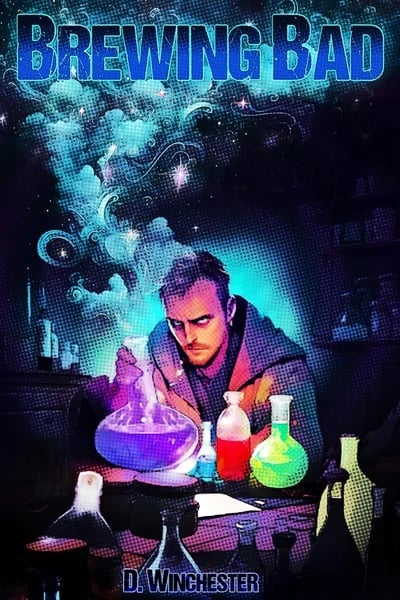
Brewing Bad
by DWinchester
● CompletedRoyalroad
#GameLit#Reincarnation#Progression#Anti-Hero Lead#Kingdom Building#Action
Archivist Notes
Lucas kicked the wingless bureaucrat in the face mid-fall, stole his administrative key, and dove through a door that opened onto empty space. He hit the ground hard enough to crack a wooden lid, punched his way out of a shallow grave, and immediately found himself staring at a floating translucent box above a jug of cheap liquor. That window did not just list the drink as Tainted Rotgut. It showed Poison 1, minus 2 Int, and a Purifying agent tag. In that exact second, the sterile, committee-designed purgatory that tried to erase his memories and reset his soul became irrelevant. Lucas had traded cosmic bureaucracy for a world where chemistry could be weaponized, where every herb carried numerical stats, and where survival depended on reading the fine print before mixing anything into a cauldron. The alchemy system here ran on binary alignments and catalyst shifts rather than ancient incantations. Most makers followed strict elemental dogma, wasting fortunes on compatible reagents. Lucas ignored the theory entirely. He treated reactions like industrial processes, leaching toxins with alcohol, using fractional distillation, and employing sour dwarf berries as a strong catalyst to flip poison directly into euphoria. That shortcut turned common forest waste into Brew of Mana Intoxication, a narcotic that hooked lords faster than they could hide their cravings. The city of Lordanin operated on backroom deals, guild monopolies, and gang protection rackets. Lucas did not try to reform the system. He plugged into its cracks. He knew how to manufacture scarcity, how to price desperation, and how to turn addicts into walking vaults. His cheat was not magic. It was supply chain logistics, pharmacology, and ruthless market psychology applied to a feudal economy. He started small, selling blue to tavern owners, then got burned when his distributor Brog sold him out to the crown. The guards kicked down the Chimera’s Chalice, the crowd scrambled for scattered gold coins, and Lucas used a half-orc waitress named Bernadenna as a distraction to slip out the window. That betrayal forced him off the streets and into the crumbling Parin estate, where he met a bankrupt Viscount, a grizzled dwarf, and a mountain of a half-orc. They needed money. He needed cover. The arrangement was never friendship. It was mutual exploitation disguised as partnership. Lucas traded poison for shelter, and shelter for a hidden root cellar lab. He was not chasing destiny. He was building an empire on stolen land, forged in borrowed names, and funded by the ruin of men who thought they were untouchable.
They wanted to use addiction as a leash to get their way, and in return, I've done exactly that to them.
Brewing Bad
Story Chronicles
NODE 01Brewing Muscle in a Stone Cage
dungeon escapeimprovised alchemycrew formation
Archivist Insights
Lucas woke up frog-marched into a damp castle dungeon alongside three other wanted men, including a stoic half-orc named Hura’gh and a nervous merchant dwarf called Kar’gandin. The guard captain dumped them into a cramped cell and left them to rot, expecting them to break under the screams echoing from the adjacent torture chamber. Lucas did not wait for the axe. He assessed the room like a cook assessing a broken kitchen, noting rusted iron bands, sodden hay floor, creeping green slime, and Widower’s Root growing through ceiling cracks. He knew traditional alchemy demanded precise ratios and clean glassware. He had none. So he improvised. He borrowed a stolen iron cap, crushed Wizened Gnome Caps and pipeweed, added rough spirits, and boiled the toxic sludge over a tiny fire built from straw and dried dung. The goal was not safety. It was leverage. He needed Hura’gh to bend those rusted bars. The first batch failed, spilling purple sludge that did nothing. Lucas refined it, leaching out the worst poison with aged brandy, roasting the mixture until the intelligence and endurance stats burned away, leaving only raw strength and a ten percent berserk chance. He handed the foul gray liquid to the half-orc, who drank it without hesitation. The effect was instantaneous. Hura’gh’s muscles swelled, his eyes went wide, and he tore the heavy oak cell door clean off its hinges like it was wet cardboard. Lucas unlocked the noble’s cell, grabbed the keys, and prepared to slip past the sleeping guards. But the potion’s toxicity had seeped into the unconscious prisoner Hardcore’s head wound, driving him mad. While Lucas and his crew slipped into the courtyard, Hardcore woke screaming, alerting the watch and triggering the alarm that forced them to jump into the moat wearing stolen armor. Lucas saved his own skin, but the botched exit proved a harsh lesson. Cutting corners worked until it did not. The escape bought them a hiding spot in a decaying orchard, but it also painted a target on their backs and forced Lucas to confront the reality that his crew needed discipline, not just muscle. He could not trust loose cannons, and he certainly could not afford another dead weight dragging them into the open. The victory felt hollow because the real work, the grinding, the sourcing, the scaling, had barely begun. Now they needed a steady income, a secure lab, and a way to move product without getting hunted by every mage in the kingdom.
◆ Conclusion
Lucas improvises a strength potion from dungeon scraps, empowering Hura’gh to tear open the cell and spark a chaotic escape that forces the crew into hiding.
NODE 02Raiding the Abattoir and Crossing the Line
supply raidmoral compromisegang warfare
Archivist Insights
With the manor secured but supplies running low, Lucas realized his entire operation hinged on one volatile ingredient, goblin bile. Adventurers were slaughtering greenskins for bounties, starving his recipe at the source. Instead of begging, he planned a direct strike. He recruited farmhands, armed dwarves with crossbows, and moved under cover of darkness to a decrepit farmhouse serving as the Blind gang’s illicit processing plant. The mission was simple, kill the watchers, seize the barrels, burn the site, and frame the Butchers for the chaos. Lucas led the charge, watching as Hura’gh ripped a guard’s throat out and tossed him onto a corpse pyre. Inside, the air reeked of spoiled organs and crude chemicals. Lucas recognized Garren, a former associate who had beaten his secrets out of him months ago and left him to die in an alley. Garren tried to bargain, offering a cut of their inferior Midnight and Dusk formulas. Lucas did not negotiate. He dragged the traitor against a rotting wall and slit his throat. The act surprised even Lucas. There was no thrill, only a cold, clinical finality. He had never killed anyone on Earth, and the weight of that choice settled heavily on his shoulders. They stripped the place of two gallons of bile, planted meat cleavers to stage a gang retaliation, and set the building ablaze. The raid succeeded, but the aftermath revealed a larger war. The Butchers and Knights of Brass had already decimated the Blind’s territory, turning the market district into a bloodbath. Lucas realized he could not rely on street-level distribution anymore. He needed higher margins and safer channels. The nobility offered both, provided he played along with their vanity and their cravings. He shifted his focus from dockside junkies to garden parties, refining his pricing strategy and learning to manipulate aristocratic egos. The murder of Garren marked his transition from desperate survivor to calculated operator. He understood now that mercy was a luxury his enemies would not extend, and that every relationship in this world ultimately came down to leverage, cash, and the willingness to burn bridges. The road ahead required him to navigate court politics, dodge invisible spies, and keep his crew from fracturing under the pressure of sudden wealth. He locked himself in the basement lab, sealed the entrance, and began cooking again, knowing the next move would demand something far more dangerous than a knife.
◆ Conclusion
Lucas raids a rival gang’s processing facility, secures critical goblin bile, and crosses a moral line by executing a traitor to protect his supply chain.
NODE 03The Glass Trap and Turning the Tables
political trapchemical leveragepower reversal
Archivist Insights
The Whisperers, a shadowy network of blackmailers and mages, made their move during Adin’s engagement dinner at the Parin estate. Lord Torvin arrived with his daughter Arissa and two lieutenants, demanding Lucas surrender his operation and work as a subordinate. They assumed his desperation would make him compliant. Lucas smiled, poured ten-year-old brandy into a set of custom crystal flutes, and raised a toast. Everyone drank. Within seconds, Torvin’s glass slipped from his fingers, Arissa slumped backward, and the lieutenants dropped like stones. Adin panicked, convinced they had been poisoned. Lucas calmly explained the truth, the bottle was clean. He had coated the inside of four clear glasses with a sweet candy glaze laced with pure Blue. The five blue-tinted glasses were safe. The four clear ones were lethal doses. He had not just neutralized their assassination attempt. He had inverted the power structure. Torvin now sat trapped in a chair, his body bound by chemical dependency rather than chains. Lucas refused to let him leave until terms were signed. He offered a month’s supply spread across their cells, buying time while ensuring they could not detox quickly enough to retaliate. The negotiation stretched into hours. Torvin threatened execution, recalled his city-wide spy network, and tried to intimidate Lucas with mentions of dragon hunters and magical assassins. Lucas countered by reminding him that his empire was portable, his formula was secret, and the nobles lining his pockets would riot if the supply vanished. The old man finally relented, shaking Lucas’s hand with ice in his veins but compliance in his posture. The victory was temporary. Torvin would regroup, find loopholes, and strike when Lucas’s guard slipped. But for now, Lucas held the leash. He walked the prisoners out, collected his weapons, and returned to the cider house exhausted but alive. The engagement dinner had transformed from a political submission into a hostage exchange. Lucas now controlled a duke’s daughter, a master manipulator, and a faction of influential addicts. He knew the peace would shatter the moment Torvin found a workaround. Until then, he doubled down on security, hired sword instructors, practiced with an invisibility ring, and stockpiled winter supplies. The board was set, the pieces were moving, and Lucas refused to blink first.
◆ Conclusion
Lucas poisons guest glasses instead of bottles at an engagement dinner, forcibly binding powerful nobles to his drug operation through chemical dependency.
NODE 04Frost Distillation and Forging a New Identity
stealth trainingwinter prepromantic tension
Archivist Insights
Winter settled over Lordanin like a heavy blanket, freezing the roads and slowing the harvest. The sudden quiet gave Lucas breathing room, but it did not grant him peace. He spent his days drilling with a wooden dirk under Sir Milen’s brutal instruction, taking blows to the head and ribs just to condition his reflexes. He knew magic users like Torvin’s allies would eventually bypass physical guards, so he needed speed, precision, and evasion. That need drove him to practice with an invisibility ring purchased from a sage for eighty gold dragons. The first attempts failed. Panic broke the spell instantly. Lucas forced himself to breathe, visualize the sigil, and calm his mind. By night three, he could flicker out of sight for minutes at a time. He tested it in the snow-covered orchard, moving silently past sleeping servants, perfecting his ability to pick locks and open doors without breaking concealment. Meanwhile, he retreated to his hidden root cellar lab, uncrating crates of dried witch grass blossoms, preserved wizened gnome caps, and purified goblin bile. He brewed batches of Blue for his noble clients, watered-down variants for the Knights of Brass, and experimental healing salves for the village herbalist Cassara. The operation scaled quietly. Kar’gandin deposited excess gold into dwarven banks, earning interest while Lucas focused on production. Danaria visited him in the parlor, drawn by the warmth and the falling snow. Lucas showed her how frost distillation worked, freezing applejack from fermented cider to concentrate the alcohol. She drank the sharp liquor, laughed, and leaned in. Their kiss was brief, charged, and completely reckless. He pulled away, knowing the boundary lines were blurring, knowing he was a dealer playing house in a nobleman’s mansion. The Winter Feast arrived, filling the manor with roasted turkey, braised lamb, and laughing guests. Lucas navigated the crowds, greeting farmers and lieutenants alike, masking his paranoia behind polite smiles. He knew Torvin’s spies would still be scanning the estate, waiting for a misstep. He knew the Whisperers would eventually learn about the glass trick. He knew addiction was a ticking clock. But for tonight, the fires burned high, the snow fell silent, and Lucas allowed himself one evening of rest before the inevitable storm broke. He toasted the harvest, ate until he regretted it, and prepared for spring.
◆ Conclusion
Winter grants temporary reprieve as Lucas trains combat skills, practices invisibility, and stockpiles winter supplies while preparing for inevitable magical retaliation.
Character Lore Pantheon
Lucas Sharpe
pragmaticmethodicalmorally flexible
Lucas operates as a ruthless pragmatist draped in a fabricated noble identity. His true edge combines modern pharmacological knowledge with a statistical interface revealing ingredient properties in real-time. He treats alchemy like industrial manufacturing, ignoring elemental dogma in favor of raw stat alignment and catalyst manipulation. Betrayed early, he builds his operation on leverage, scarcity pricing, and controlled addiction. He crosses moral lines when necessary, executing traitors without hesitation, yet maintains strict discipline within his inner circle. His leadership is transactional but fiercely protective. He constantly balances expansion against exposure, adapting quickly to political maneuvering and mastering stealth tools to counter magical surveillance. Ultimately, Lucas is a survivor who turned poison into profit, trading anonymity for an empire built on manufactured desire.
Kar’gandin
calculatingresourcefuldeeply loyal
Kar’gandin functions as the financial backbone and logistical architect of the enterprise. A veteran dwarf merchant, he brings decades of experience navigating gray markets and managing complex supply chains. His value lies in clan connections, uncanny appraisal skills, and ruthless efficiency in maximizing profit margins. He rarely engages in combat, preferring to handle smuggling routes, secure guild contracts, and oversee infrastructure like kilns and hidden labs. Operating on long-term investment logic, he deposits gold securely while advising reinvestment into protection. Despite his gruff exterior, he demonstrates unwavering loyalty, treating partners as assets worth shielding. He thrives in chaos, spotting opportunities in market shortages, and understands that wealth without defense is merely a target.
Hura’gh
physically imposinghonor-boundstraightforward
Hura’gh serves as the brute-force enforcer and tactical shield. A displaced half-orc warrior, he possesses overwhelming strength, thick skin, and a straightforward moral compass valuing combat honor. His role centers on crowd control, intimidation, and direct confrontation, routinely clearing hostile compounds and absorbing damage that would cripple ordinary fighters. Despite his size, he proves disciplined when given clear objectives, following plans without hesitation. He respects competence over lineage, readily acknowledging Lucas’s authority. Hura’gh’s loyalty stems from shared risk and fair pay, showing genuine camaraderie despite cultural gaps. He lacks patience for delicate negotiations, preferring decisive action, yet gradually adapts to the group’s need for discretion, standing guard in the shadows while others handle diplomacy.
Fair Use & IP Notice
MythFan is a community-driven, fan-contributed wiki & archive operating under Fair Use guidelines. MythFan does not host, store, or distribute any novel downloads or copyrighted media assets. All content is contributed and maintained by community members. If you believe any content infringes upon your intellectual property rights, please send a notice to [email protected] — we will review and remove infringing material within 3–7 business days upon verification.
💬
Sanctuary Discussion
Brewing Bad · Forum
🔑 Sign in to participate in discussions
Sign InProject Sanctuary · Native Discussion System